
Last Updated : Feb 20, 2026 | Author : Tanya Prasad | View Count : 1753 | Read Time : 7 min
Discover The Most Iconic Indian Temples
When you visit India, you experience a spiritual energy that’s yet to be found anywhere else in the world. Home to the oldest inhabited town on Earth, Varanasi, India, hosts sacred spaces that go back thousands of years, still standing tall. Whether you’re a history enthusiast, a spiritual seeker or just someone who appreciates incredible architecture, an Indian temple promises an enlightening journey.
Why are Indian Temples an unforgettable experience?
Indian temple are more than just religious sites. They are living pieces of history, some counted as engineering marvels built thousands of years back, with limited technology. Many are UNESCO World Heritage sites and welcome visitors of all faiths to admire their beauty and significance. Partake in soul-stirring spiritual rituals at these spaces.
1. Most Revered– Kashi Vishwanath Temple, Varanasi
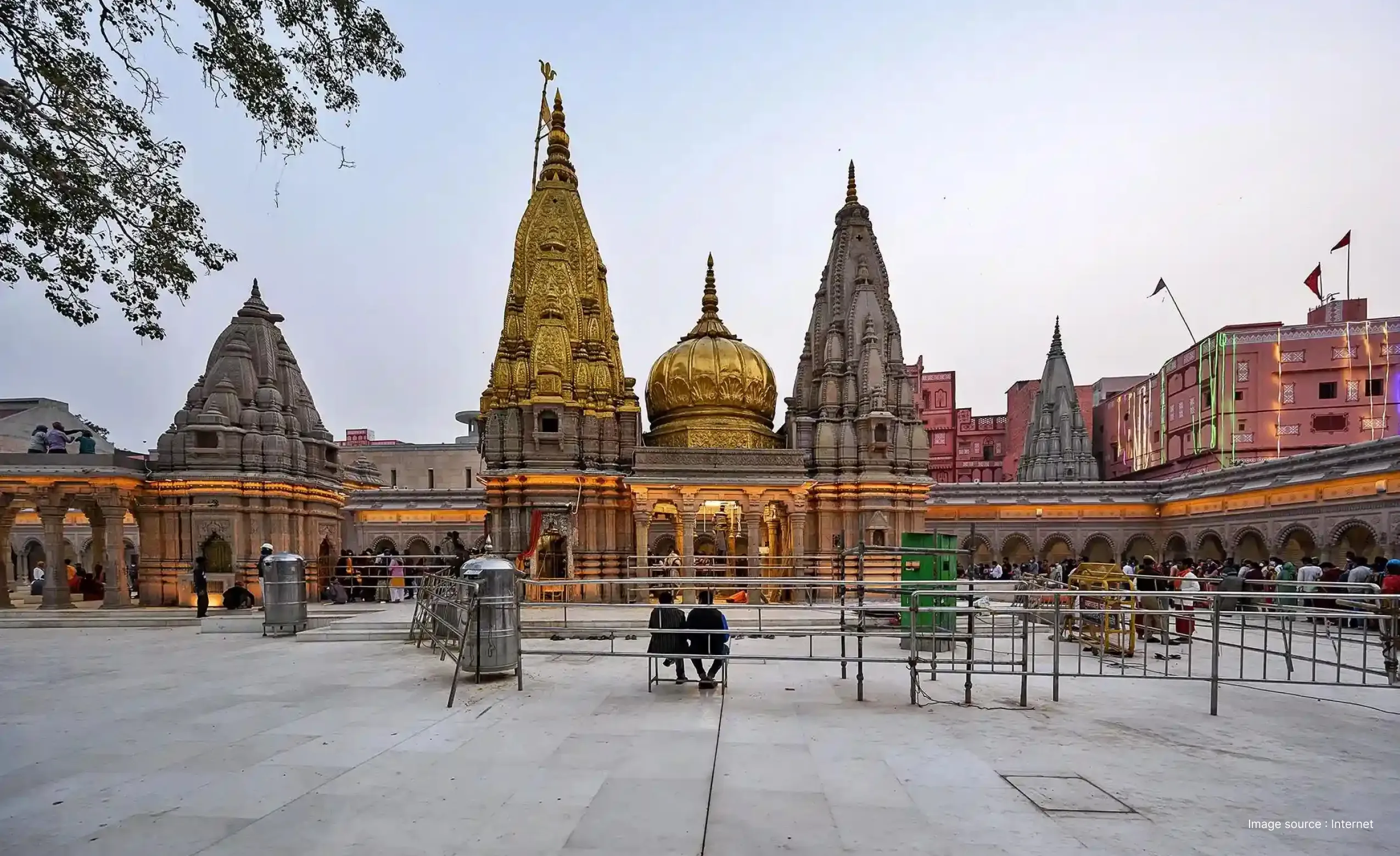
The most revered temple in Hinduism, the Kashi Vishwanath Temple, is right on the banks of the Ganges River. Located in the heart of Varanasi, one of the oldest continuously inhabited cities on earth, it has been standing here in various forms for over 3500 years, with the current structure dating back to 1780. The most fascinating feature of this temple is its spire, covered with 800 kilograms of gold. There is also a well inside the temple premises called the Jnana Vapi, considered holy.
Plan Your Visit
The best time to visit this temple is early morning, around 5 to 6 AM or during the evening Aarti, which takes place at 7 PM. Varanasi is accessible via a direct flight from Delhi’s International Airport or one of India’s fastest trains, the Vande Bharat. No cameras or phones are allowed inside, but you can store them in the free lockers provided on entry.
2. Divine Carvings– Khajuraho Temples, Madhya Pradesh
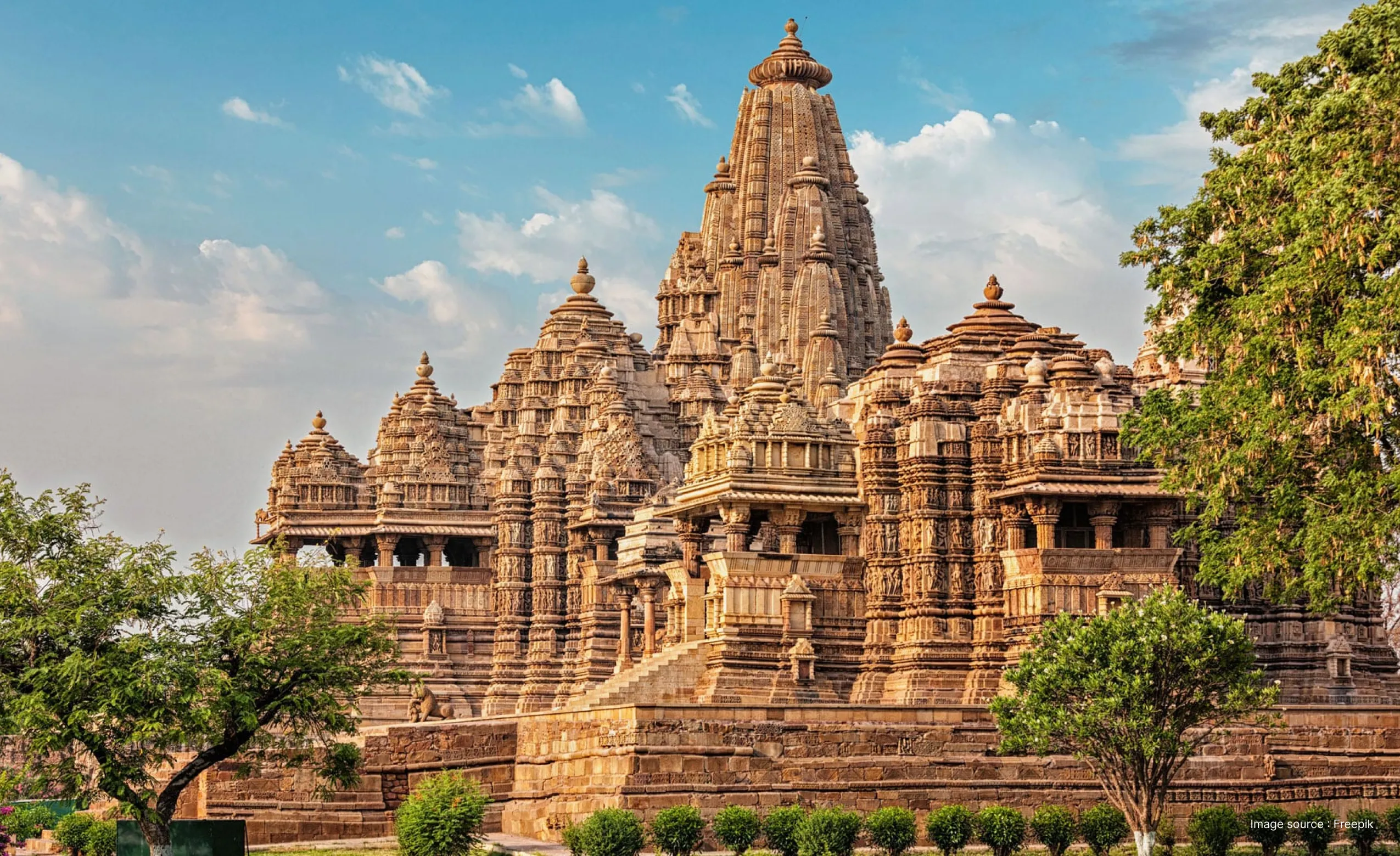
Dating back to 950 CE, the Khajuraho group of temples was built by the Chandela Dynasty. While there were originally 85 temples, only 20 survived the test of time. It is famous for its intricate carving, which cover every inch of these structures. They depict everything between life, wars, mythology, and love. These temples are divided into western, eastern and Southern groups, spread across about 9 square miles. Showcasing some of the finest Indian Temple architecture in the country, they have been recognised by UNESCO as a world heritage site.
Plan Your Visit
Located in the heart of Madhya Pradesh in central India, the best time to visit Khajuraho is between October to March when the daytime temperatures are pleasant enough to explore the outdoors. You'll need at least 3-4 hours to do the temples justice; the western group is the most fascinating & well-preserved. You can reach Khajuraho via a direct flight from Delhi & Varanasi.
Expert Tip: Plan your visit around the Khajuraho Dance Festival in February, which showcases many of the classical Indian dances with the temples as their stage.
TL;DR: Only 20 of the original 85 Khajuraho temples remain today, and every inch is covered with intricate carvings.
3. World’s Richest– Padmanabhaswamy Temple, Kerala
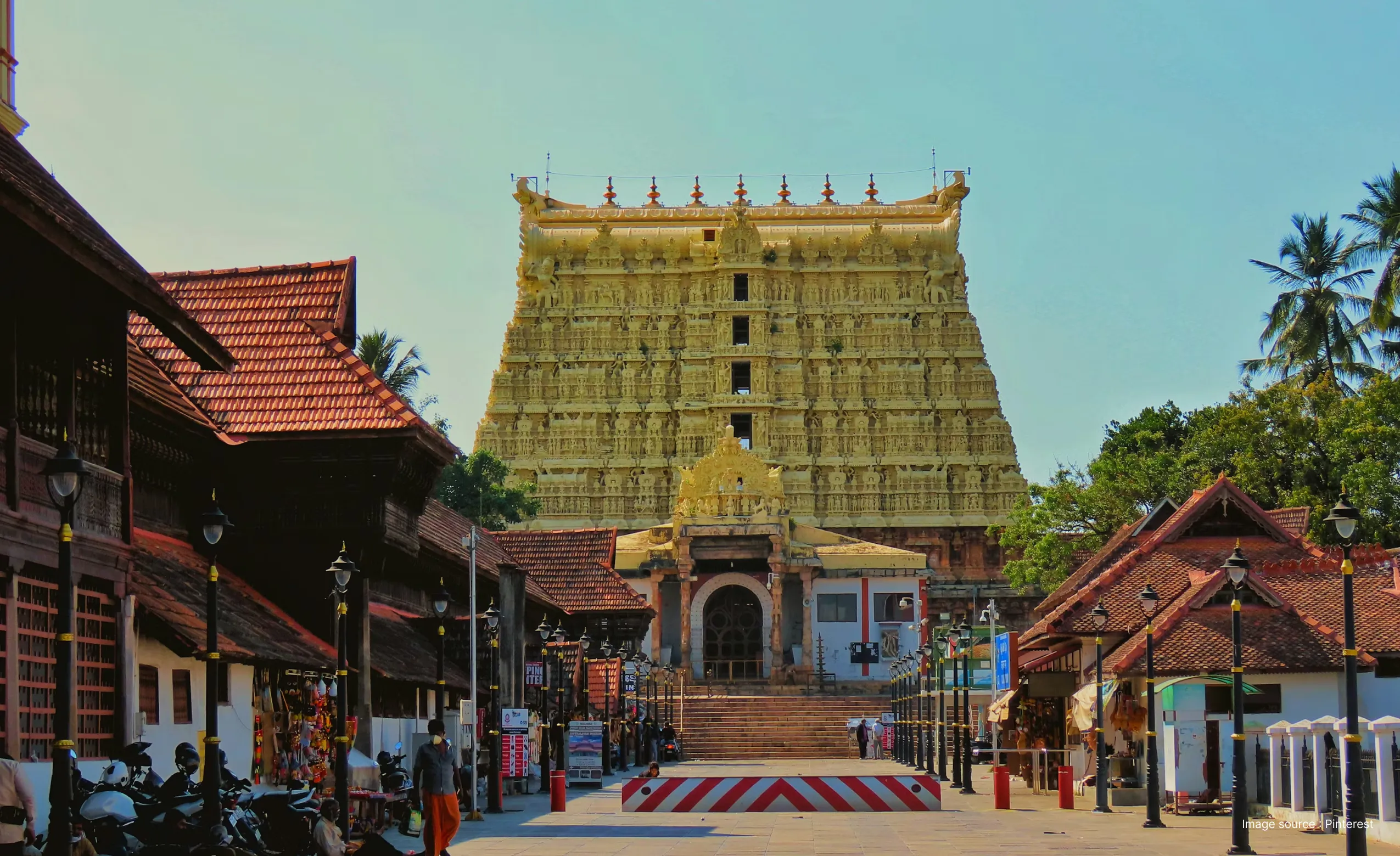
Tracing back over 1,000 years, the Padmanabhaswamy temple in Kerala was built in the Dravidian style of architecture. Its main tower (called gopuram) is over 100 feet tall with seven tiers. Each tier is covered with hundreds of intricate sculptures. The temple was also in the news globally in 2011, when the treasures worth an estimated $22 billion were discovered in the temple’s secret vaults. The main deity here is set in a reclining position, and you can only see it through three doors because the idol is 18 feet long.
Plan Your Visit
While only practising Hindus are allowed inside, the temple’s architecture is worth witnessing from outside the complex. The best time to visit the inner sanctum is early morning between 3:30-4:30 AM or late evening around 6-7 PM, when the main worship is held. Located in Trivandrum, the capital city of Kerala, you can get to this city via its airport.
Book Your South India Temple Tour
4. Spiritual Island– Ramanathaswamy Temple, Tamil Nadu
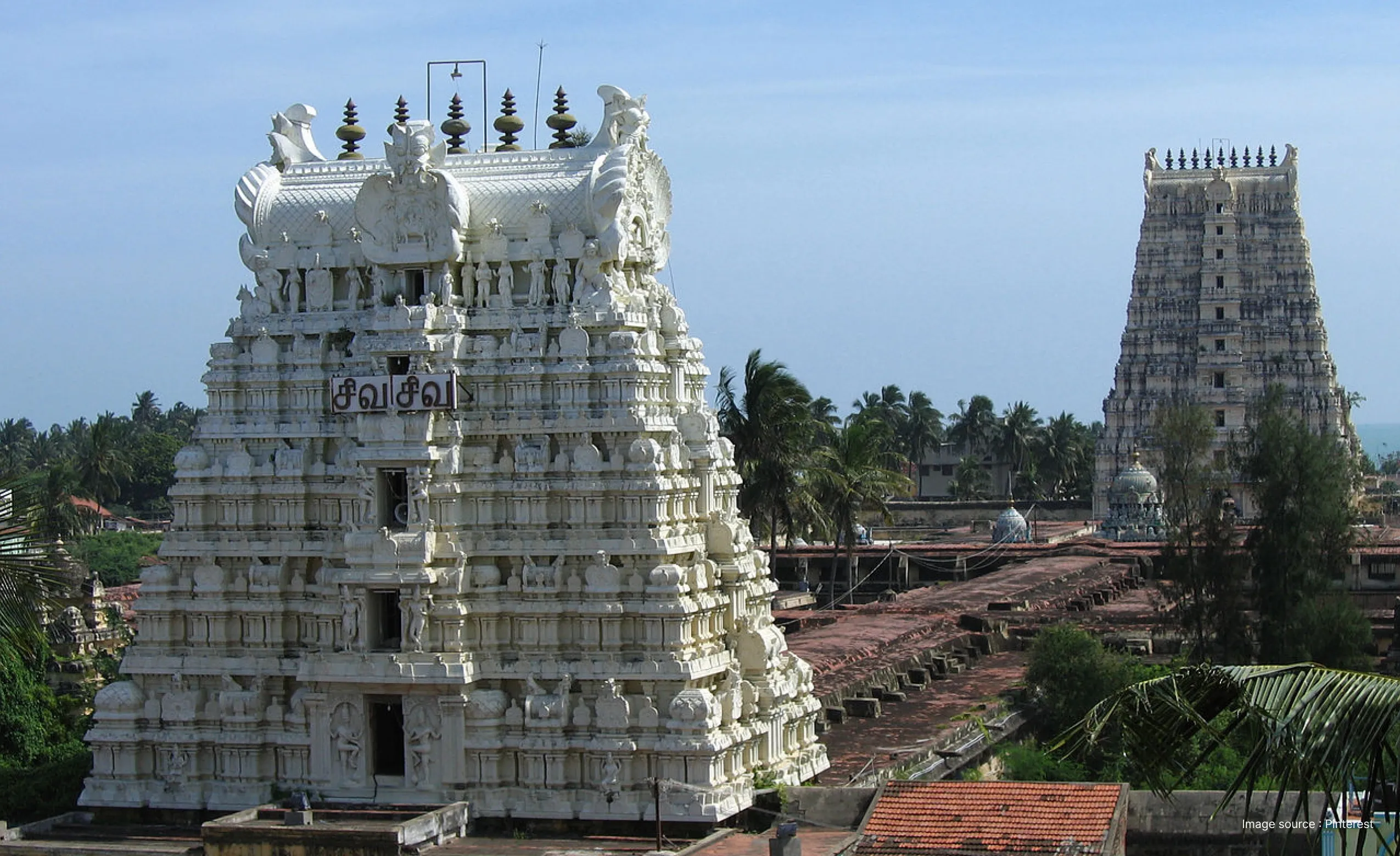
Part of the holy Char Dham pilgrimage, this temple is one of Hinduism’s holiest sites. Dedicated to Lord Shiva, it sits on the Rameswaram Island with gorgeous views of the Bay of Bengal. According to legend, this is where Lord Rama worshipped Shiva after returning from Lanka. It was primarily built between the 12th & 17th centuries and features the longest corridor among all Hindu temples with 1200 intricately carved pillars. There are 22 sacred wells (theerthams) within the temple, each with water that supposedly tastes different and has healing properties.
Plan Your Visit
Situated on the beautiful coastline of Tamil Nadu, the best time to visit Rameswaram is between October & March. The city’s nearest airport is at Madurai, where you can find connecting flights to. The Maha Shivaratri festival is particularly special here, but it’s worth noting that a huge number of devotees show up around then. Many pilgrims take a ritual bath in all 22 wells. While you don't have to participate, it's fascinating to watch.
5. Carved From a Mountain's Heart– Kailasa Temple, Ellora
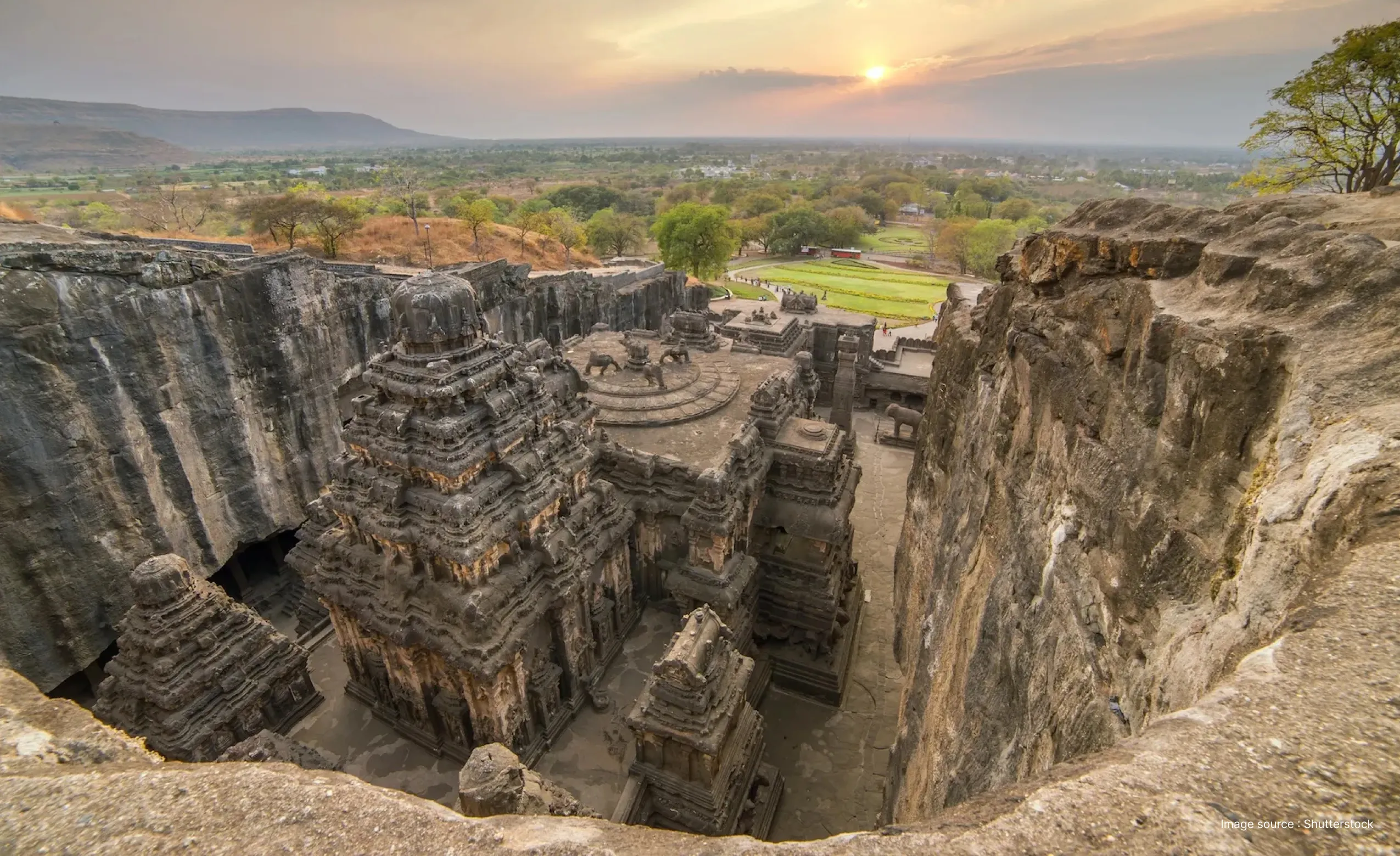
One of the oldest temples on Earth, the Kailasa temple was carved out of a single massive rock in the 8th century. More than just an Indian temple, it is an engineering marvel that defies explanation to this date. It is estimated that about 400,000 tons of rock had to be removed to create this beautiful structure. However, given the rate ancient tools could work at, it should’ve taken 150-200 years. This contradicts the historical records, which suggest it was completed in just 18 years!
Plan Your Visit
The temple is Cave 16 in the Ellora complex of 34 caves. The nearest city is Aurangabad, which has both an airport & a railway station. We recommend visiting between November to February when it’s cooler. The caves are closed on Tuesdays.
6. Shrine of Divine Feminine– Kamakhya Temple, Assam
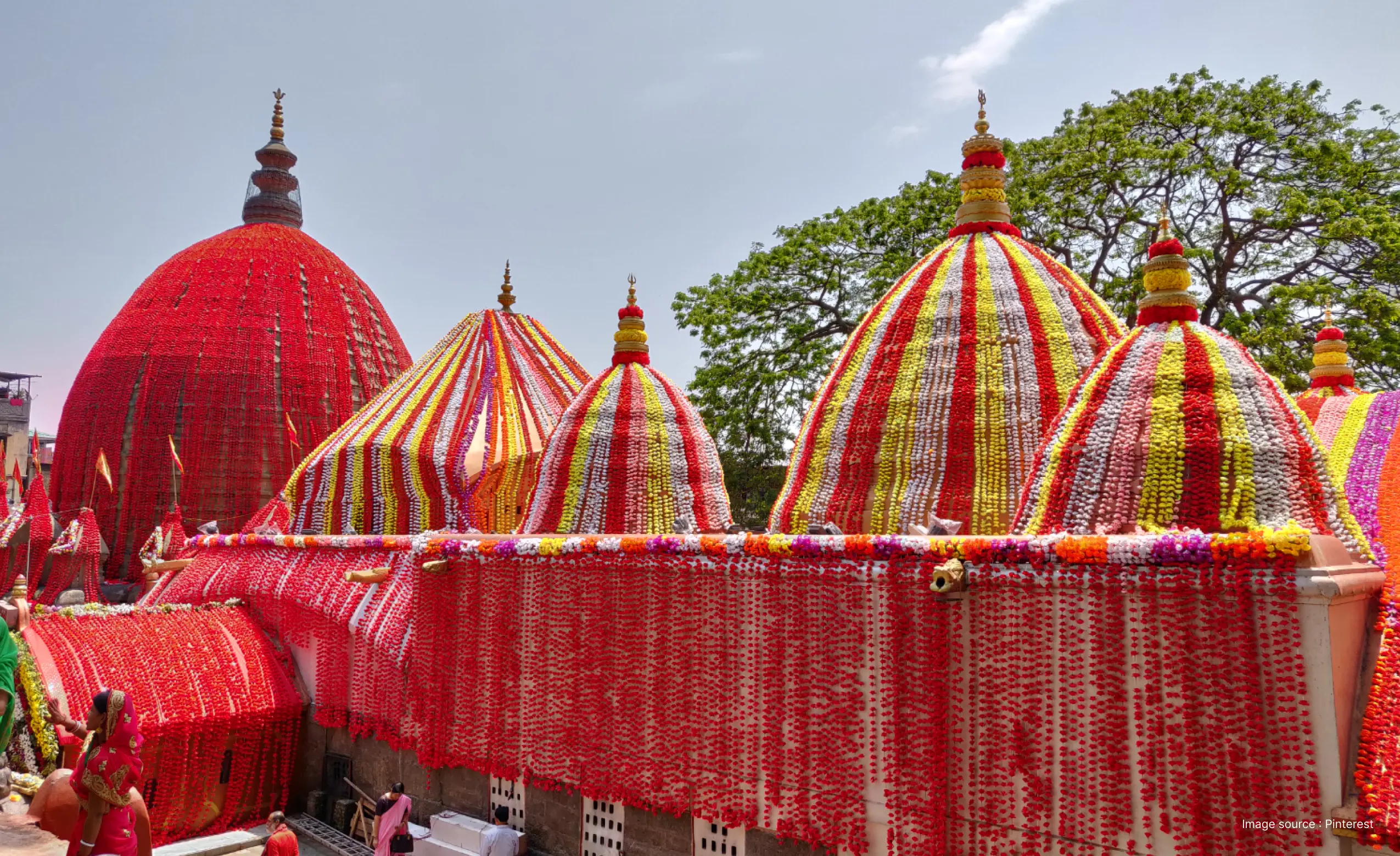
Dating back to the 8th-9th century, the Kamakhya temple is one of the 51 shakti peethas scattered throughout South Asia, which mark the spots where parts of Goddess Sati’s body fell. This temple in particular marks where her womb fell, so the worship is directed to no idol but a rock shaped like a yoni (female reproductive organ). During the Ambubachi Mela festival in June, the temple closes for three days because legend says the goddess is menstruating. On the fourth day, thousands of devotees receive a piece of red cloth that's been placed near the stone, considered extremely sacred.
Plan Your Visit
The temple sits atop Nilachal Hill in Guwahati, about 800 feet above sea level, so you'll need to climb about 100 steps to reach it. October to March are the most comfortable months to visit, but the Ambubachi Mela is usually held in mid-June. Guwahati has an international airport as well as a railway station, and the temple is only about 8 km from the city centre.
7. 1,000 Years of Grandeur– Brihadeeswar Temple, Thanjavur
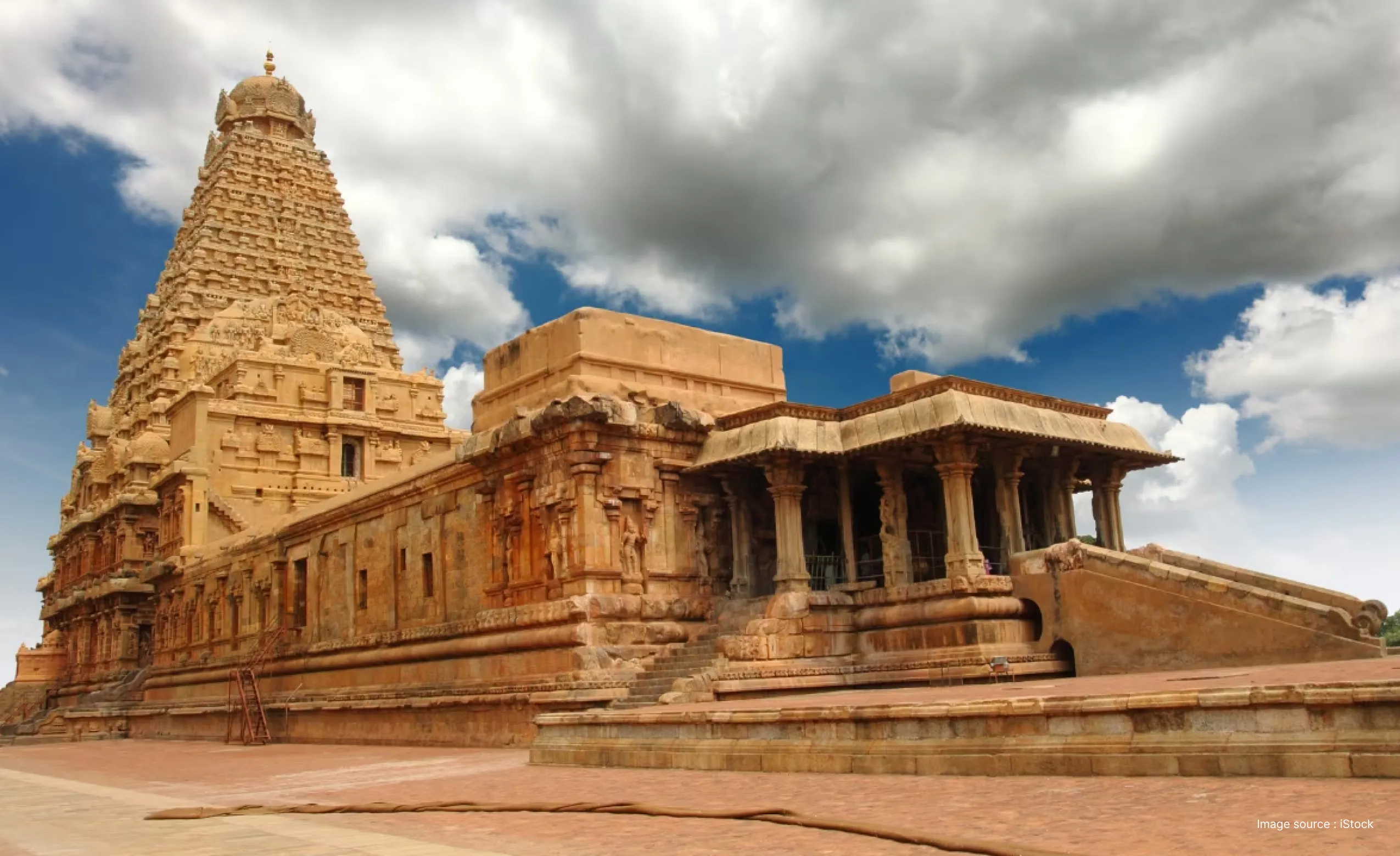
The temple recently celebrated its 1,000th birthday, and it still stands strong. This masterpiece of Chola architecture is a UNESCO World Heritage Site, dedicated to Lord Shiva. It is nicknamed the “Big Temple” in the local language, which seems like an understatement when you see it. The temple tower (vimana) stands 216 feet tall and is topped with a single granite capstone weighing 80 tons, which was lifted to the top of a 216-foot tower over 1,000 years ago. Nobody knows for certain how, but the most popular theory is that they built a 6-kilometre-long ramp.
Plan Your Visit
The temple complex covers about 20 acres, so plan for at least 2 hours to explore it. October to March are the best months to visit & the temple is open from 6 AM to 8:30 PM. There are special celebrations during the Chithirai Festival in April/May, but expect crowds. Thanjavur is a 6-hour drive from the state’s capital, Chennai. Alternatively, you can fly in via the Trichy airport.
8. Chariot Festival Shrine– Jagannath Temple, Puri
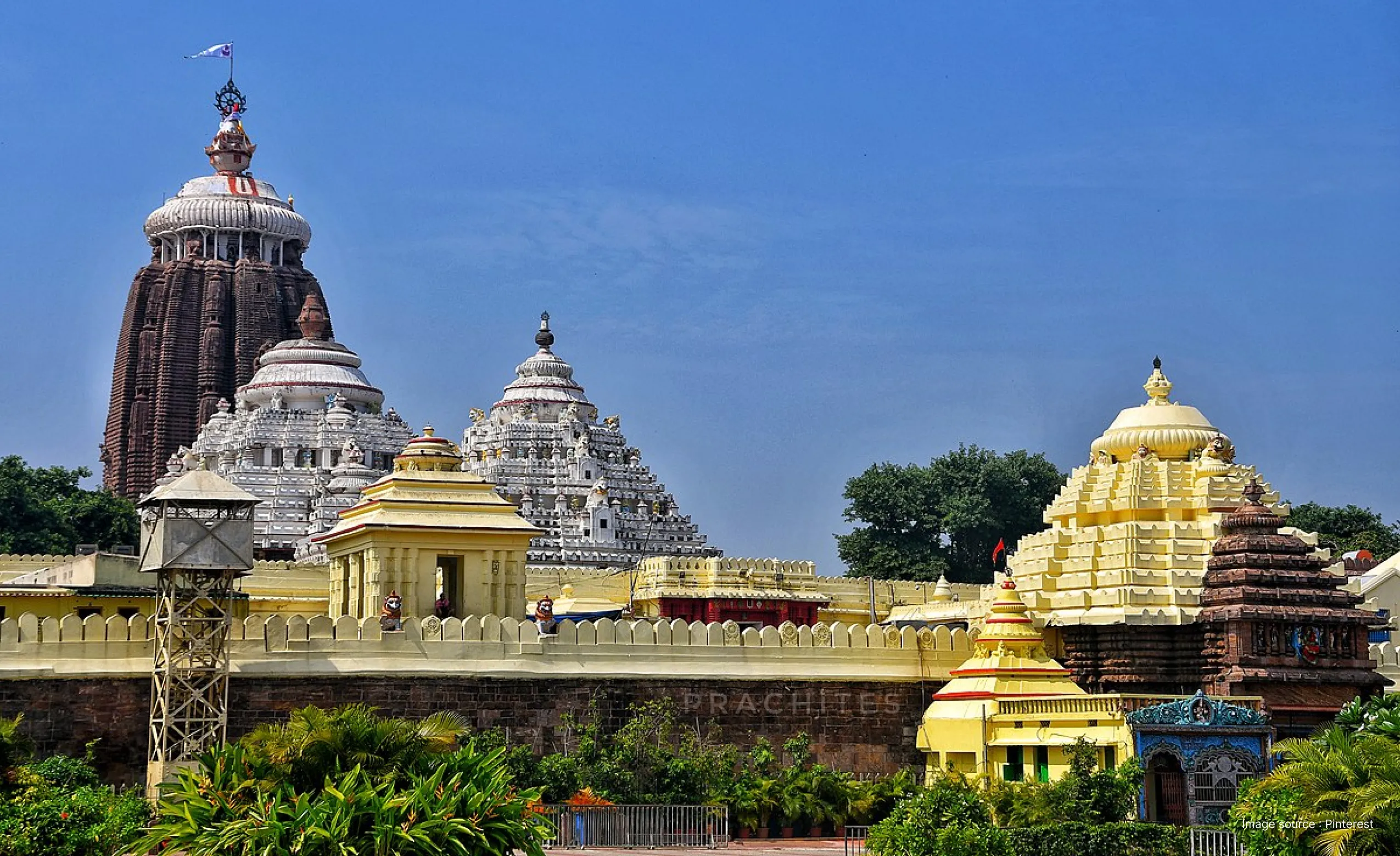
Another one of the four sacred Char Dham pilgrimage sites, this temple in Puri is dedicated to Lord Jagannath, a form of Lord Vishnu. Its latest structure dates back to the 12th century. A fascinating phenomenon here– the temple flag on top always flies in the opposite direction to the wind. Every single day for over 800 years, a priest climbs the 214-foot temple tower to change this very flag. If this ritual is missed even one day, legend says the temple would close for 18 years.
Plan Your Visit
The famous Rath Yatra (chariot festival) in June/July is when the city sees the largest number of devotees. Three massive, 45-feet-tall wooden chariots carrying the deities are pulled through the streets by thousands of people. October to March is a great time to visit, when you can also enjoy the Puri beach. The nearest airport is Bhubaneswar, only about 60 km away.
9. Buddhism’s Most Sacred– Mahabodhi Temple, Bodhgaya
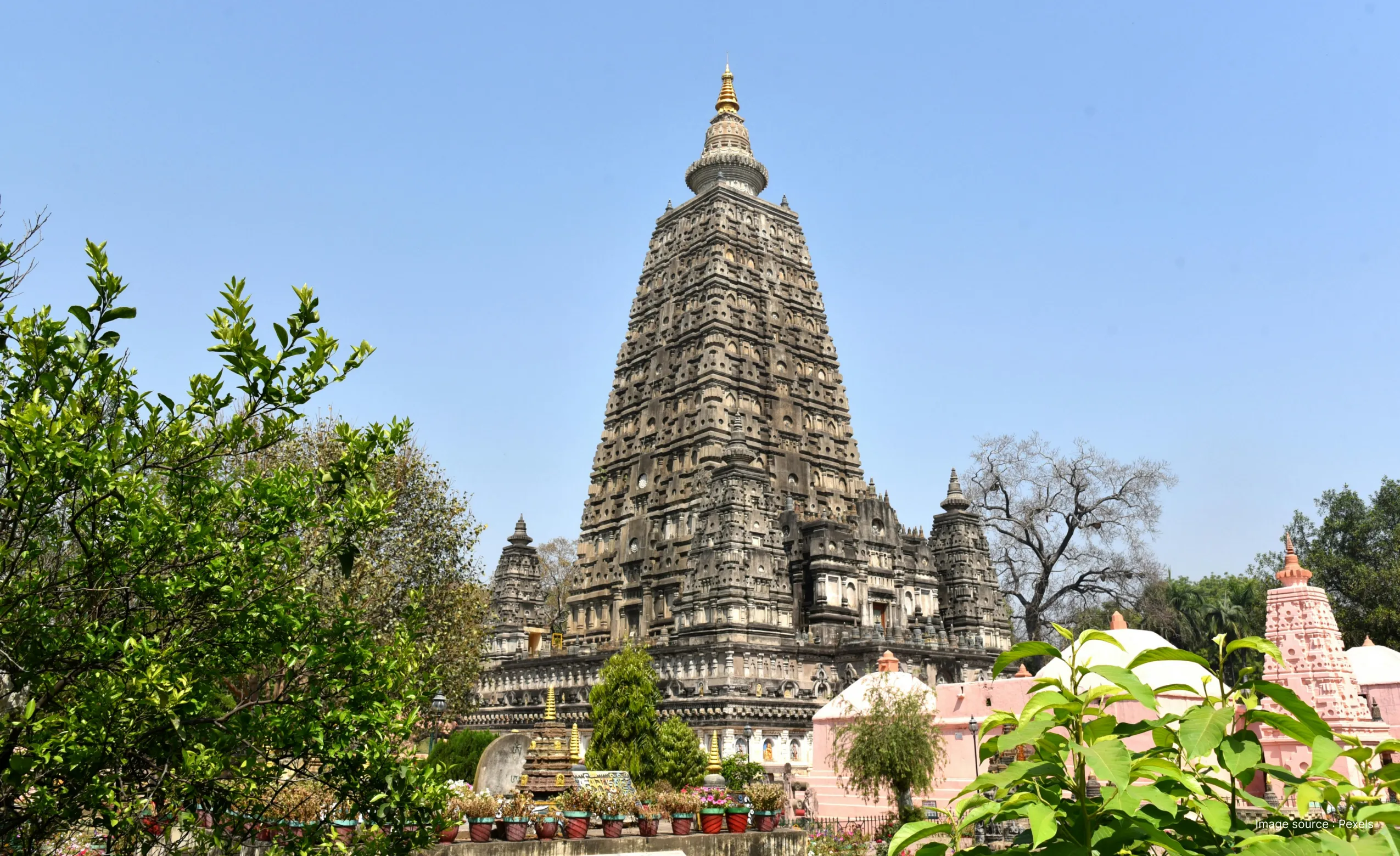
Bodh Gaya, a sacred city in Bihar, India, is the place where Siddhartha Gautama became the Buddha around 2,500 years ago, roughly 531 BCE. It is one of the oldest brick structures in India. Also a UNESCO World Heritage site, it is the most sacred place in Buddhism. The Bodhi tree here is believed to be a direct descendant of the original tree under which Buddha meditated. There is also a red sandstone slab called the Vajrasana (Diamond Throne) that marks the exact spot where Buddha sat.
Plan Your Visit
Many people come here to meditate, so maintaining silence and respect is important. The best time to visit is between November to February. Buddha Purnima (Buddha's birthday) in April/May is when you can witness celebrations here. Gaya has the nearest airport and railway station, just about 13 km from here.
10. Gateway to the Himalayas– Badrinath Temple, Uttarakhand
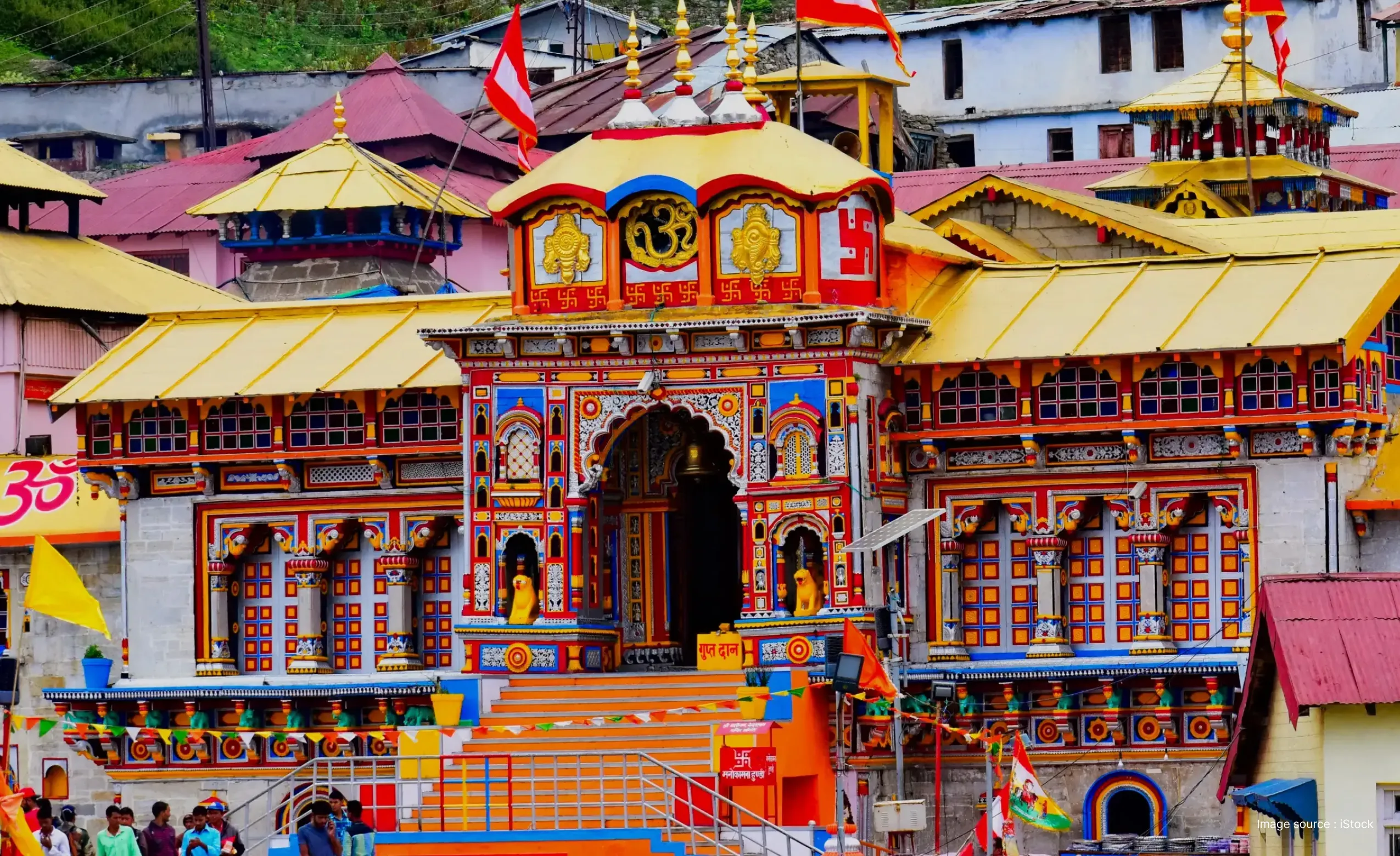
Although the site has been sacred for much longer, the temple was established by Adi Shankaracharya in the 9th century CE. One of the four Char Dham pilgrimage sites, its location in itself is majestic, at 10,279 feet in the Garhwal Himalayas. It is also one of the 108 Divya Desams (sacred abodes of Vishnu). The temple sits between the Nar and Narayan mountain peaks, with the Alaknanda River flowing nearby. Inside, there's a 3-foot-tall black stone idol of Lord Vishnu in a meditative pose, believed to be carved from a single Shaligram stone. Close to the temple lies a natural hot spring called Tapt Kund, where pilgrims find it comfortable to bathe even in freezing weather.
Plan Your Visit
Owing to its location & heavy snowfall in winters, the temple is only accessible about six months a year. The best time to visit is between May to June. As it sits at over 10,000 feet in elevation, you might experience altitude sickness. So take it slow, stay hydrated, and rest if you feel dizzy or nauseous. The journey itself is an adventure, with winding mountain roads and spectacular views. The nearest airport is Jolly Grant in Dehradun, about 317 km away.
TL;DR: Perched at 10,279 feet in the Garhwal Himalayas, the Badrinath temple is only accessible six months a year when it’s not snowing heavily.
Reserve Your Char Dham Pilgrimage
FAQs
1. Do I need to be Hindu to visit these temples?
While most Indian temples welcome visitors of all faiths, a few like the Jagannath temple in Puri & Padmanabhaswamy Temple in Kerala restrict non-Hindus from entering the inner sanctum. Even so, foreigners enjoy admiring the architecture from outside the complex.
2. What should I wear when visiting an Indian temple?
Like any other religious space, modest clothing is essential when visiting Indian temples. Covering your shoulders and knees is good enough. Avoid shorts, short skirts, sleeveless tops, and anything too tight or revealing. Carrying a scarf or shawl is always smart.
3. Is photography allowed inside temples?
Many active temples prohibit cameras and phones inside the main sanctum, such as the Kashi Vishwanath in Varanasi. However, they do provide lockers at the entrance for you to store your photography devices. Archaeological sites like Khajuraho, Ellora, and Brihadeeswar usually allow photography, sometimes with a small fee.
Plan your bespoke india journey today
tell us what inspires you - and we will handcraft an experience that mirrors your elegance, pace & personality.
START PLANNINGTrending Travel Stories
Stay inspired with our most popular travel stories, practical advice, and must-read destination guides.

Backpacking Sleeping Pad
Top 6 Places to Travel in December

The Science Behind Compression Socks

All you need to know about the DJI Osmo Pocket 3 Creator Combo
Hindu Temples in the USA
Luxury Destinations in India
Booking a Bespoke Spiritual Trip in India

Best Luxury South Temple
TRAVELOSEI PROMISE
What To Expect?

The Real India,
Re-Imagined For You
India is not just a destination - it's a world with-in the world. TRAVELOSEI go far beyond guide-books to offer you an India that is authentic yet exclusive, spiritual yet sophisticated delivered through private doors, rare access, and impeccable attention to details.

Trusted By Global Elites
From World Class Leaders to Forbes Listed Families and international Royalties to
visionary CEOS.
Our clientele chooses us for one reason - We Know India. Over two decades of providing
experiences which aren't just luxurious - they are intimate, curated & wildly rare.

Bespoke Travel Experience
For those who seek truth in detail, art in hospitality, and identity in experience. Our Luxury Travel Architect work discreetly and personally with you to craft travel experiences that go beyond 5 Stars, where every detail whispers luxury - and legacy.

White-Glove Concierge
24 X 7 Dedicated Concierge Support even in the wildest corners of India. At TRAVELOSEI, our concierge team ensures that everything-from airport- tarmac pick-ups, last minute reservations and private spiritual sessions - is handled before you even ask.


