
Last Updated : Apr 04, 2026 | Author : Tanya Prasad | View Count : 1031 | Read Time : 7 min
North Indian Food: The Complete Guide to Flavors, Dishes & Where to Eat
India is one of the most food-diverse countries in the world, and the north alone could keep a curious eater busy for years. Whether you've already had butter chicken at your local Indian restaurant or you're completely new to this cuisine, there's always something more to learn and something more to taste. This guide covers everything you need to know about north Indian food, from what makes it unique to where you can find a great plate of it right here in the US.
Is it worth exploring north Indian food as an American?
North Indian food is one of those cuisines where the more you dig in, the more there is to discover. From rich, slow-cooked curries to crispy street snacks and tandoor-baked breads, it covers a lot of ground. The region itself is made up of multiple states, each with their own cuisine and delicacies to try.
What Makes North Indian Food Different From the Rest of India?
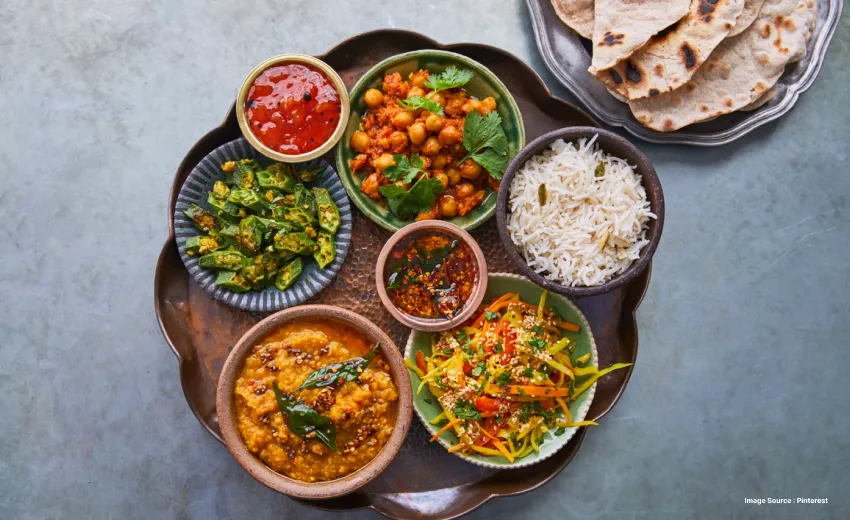
India is a large country, and its food changes almost every hundred miles. The south leans on rice, coconut, and tamarind. The east uses a lot of mustard and fish. But north Indian food has its own clear identity, shaped by geography, history, and centuries of outside influence.
The biggest influence came from the Mughal Empire, which ruled much of northern India for hundreds of years. That brought tandoor cooking, slow-cooked meat dishes, saffron, and rich, cream-based gravies into the kitchen. Wheat became the staple grain instead of rice, which is why breads like naan, roti, and paratha are central to every meal.
Dairy is also a big deal up north. Ghee, paneer, yogurt, and cream show up constantly, giving north Indian food that rich, warming quality it's known for. The winters in northern India can be cold, and the food reflects that with hearty dishes like dal makhani and sarson da saag.
If you've eaten at an Indian restaurant in the US, there's a solid chance you were eating north Indian food. It's the most widely represented regional style in Indian restaurants outside of India, largely because it's bold, comforting, and easy to love.
TL;DR: North Indian food is shaped by Mughal cooking traditions, a wheat-based diet, and generous use of dairy.
Must-Try North Indian Food: Iconic Dishes You Can't Miss
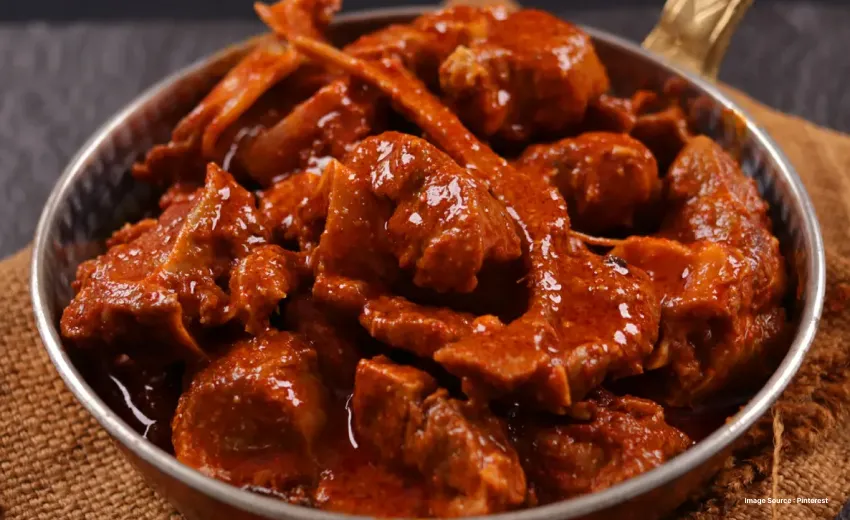
Some dishes have made north Indian food famous all over the world, and for good reason.
Butter Chicken is probably the most recognized. A tomato and cream-based curry with tender chicken, it's mild enough for first-timers and deeply satisfying for anyone.
Dal Makhani is whole black lentils slow-cooked for hours, often overnight, with butter and cream. It's smoky, rich, and one of those dishes that keeps getting better with every spoonful.
Chole Bhature is a popular breakfast or brunch combo. Spiced chickpea curry served with a giant, puffy fried bread. It's filling, flavorful, and a little indulgent in the best way.
Rogan Josh comes from Kashmir. It's a slow-cooked lamb curry with aromatic spices and Kashmiri red chilies that add deep color and flavor without overwhelming heat.
Palak Paneer is creamy spinach with cubes of fresh Indian cheese. A vegetarian staple that even meat eaters tend to love.
Lucknowi Biryani uses the dum method, where rice and meat are layered and slow-cooked together. The result is fragrant, delicate, and very different from spicier biryani styles.
For a deeper look at Indian cooking techniques behind these dishes, Serious Eats has a well-researched collection that's worth bookmarking before your next restaurant visit.
North Indian Breads: From Naan to Paratha and Everything In Between
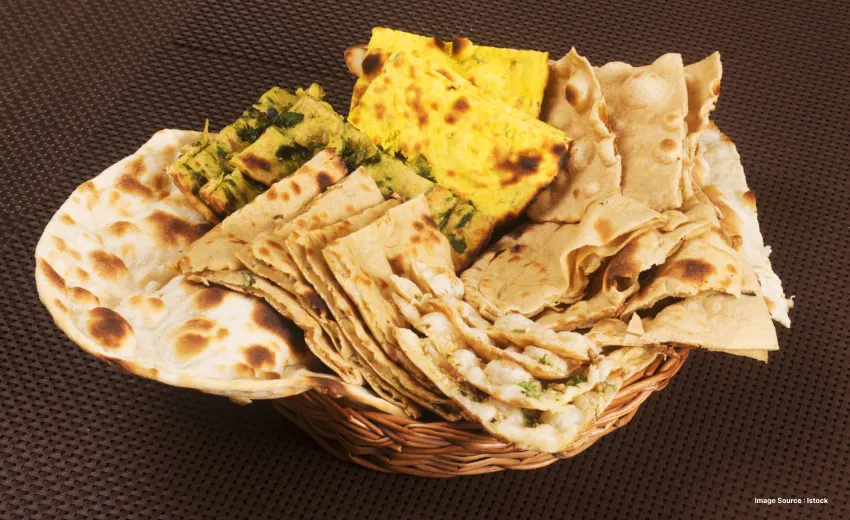
In north Indian food, bread is not a side dish. It's the centerpiece, and the variety is genuinely impressive.
Naan is the most famous. A soft, leavened flatbread baked in a clay tandoor oven. You'll find it plain, with garlic, or stuffed with cheese or potato.
Roti or Chapati is the everyday bread. Thin, whole wheat, and made fresh at nearly every home meal. Simple but essential.
Paratha is a flaky, layered flatbread that can be stuffed with aloo (potato), gobi (cauliflower), or paneer. Eaten with yogurt and pickle for breakfast, it's one of the most satisfying meals you'll come across.
Puri is deep-fried and puffs up like a balloon when it hits hot oil. It's usually served with chickpea curry or potato masala and is a big deal at celebrations.
Kulcha is similar to naan but slightly denser. It's especially popular in Punjab, often stuffed with spiced onion or paneer.
The bread culture in north India is something that surprises a lot of first-time visitors. There's a different bread for every occasion, every meal, and every region.
TL;DR: Roti is the everyday staple, parathas are a breakfast favorite, and puri is the celebratory pick.
Street Food of North India: The Real Taste of the Region
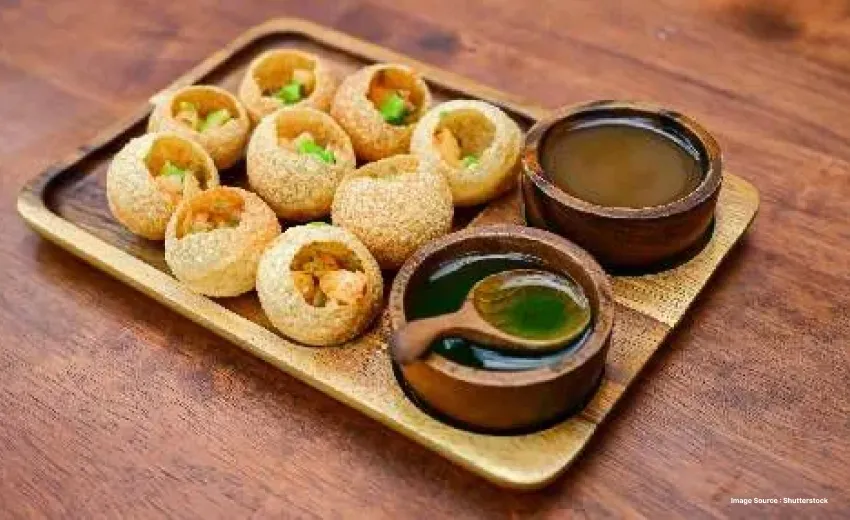
Street food is where north Indian food really comes alive. It's loud, it's fast, and the flavors are intense.
Golgappa (also called Pani Puri) is a crispy hollow puri filled with spiced water, tamarind chutney, and mashed chickpeas. You eat it in one bite and it hits every flavor note at once. It's addictive in a way that's hard to explain until you try it.
Aloo Tikki is a crispy spiced potato patty topped with chutneys and yogurt. It's one of Delhi's most beloved street snacks.
Chaat is a broad category of tangy, layered snacks that combine sweet, sour, spicy, and crunchy all in one plate. Papdi chaat and dahi bhalla are two popular versions.
Samosa needs no introduction, but the north Indian version is worth noting. It's bigger and more generously spiced than versions you'll find elsewhere in India. The dipping chutney makes it even better.
Kachori is a deep-fried bread stuffed with spiced lentils or onions. A breakfast staple in Rajasthan and Uttar Pradesh.
Delhi alone has entire streets dedicated to these snacks, and eating your way through them is a full experience on its own.
Region by Region: How North Indian Food Changes Across States
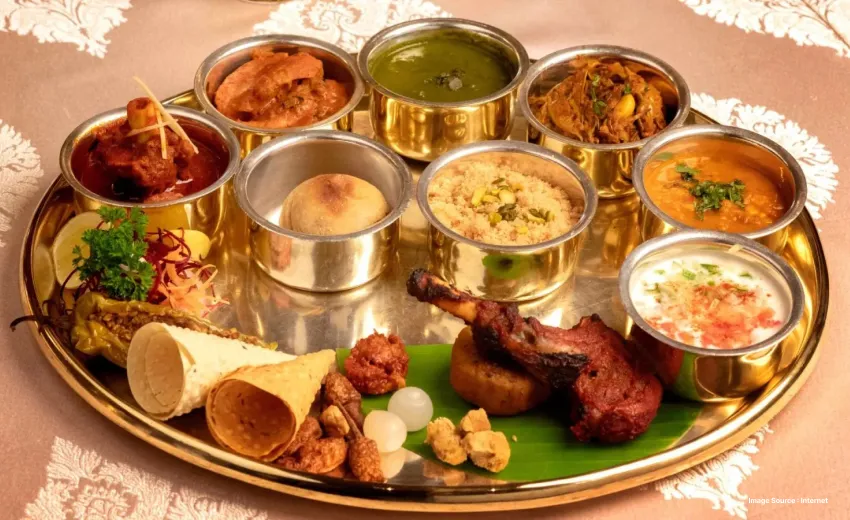
North Indian food is not one uniform thing. It shifts a lot depending on where you are.
Punjab is the heartland of butter chicken, dal makhani, and makki di roti paired with sarson da saag. Food here is rich, dairy-forward, and cooked with a lot of ghee.
Rajasthan has a cuisine shaped by the desert. Dal Baati Churma (lentils with baked wheat balls and sweet crumbled bread) is the state dish. Since water is scarce historically, the cooking relies heavily on dried spices and preservation techniques.
Uttar Pradesh is where Mughal cooking really took root. Lucknow is famous for its delicate Awadhi cuisine. The Galouti Kebab, a melt-in-your-mouth minced meat patty, is a local legend.
Kashmir brings saffron-infused dishes, slow-cooked meats, and the elaborate Wazwan feast. Rogan Josh originated here, and the food reflects the cold mountain climate beautifully.
Himachal Pradesh and Uttarakhand have simpler, rustic food. Dishes like Sidu (a fermented local bread) and Bhatt ki Churkani (a local black bean dish) are staples that most tourists never get to try.
This regional variety is a big part of what makes north Indian food so rewarding to explore.
North Indian Food for Vegetarians: A Paradise on a Plate

If you're vegetarian or just cutting back on meat, north Indian food is one of the best cuisines to lean into.
Paneer shows up in dozens of dishes. Paneer Tikka, Shahi Paneer, Paneer Butter Masala. It's fresh, mild, and soaks up spices really well.
Lentils are a protein backbone of the cuisine. Dal Tadka, Dal Makhani, Chana Dal. Each one has a distinct flavor and cooking style.
Vegetable curries like Aloo Gobi (potato and cauliflower), Baingan Bharta (smoky roasted eggplant), and Matar Paneer (peas and cheese) are hearty enough to feel like a complete meal.
Breakfast in north India is also largely vegetarian. Stuffed parathas with yogurt, poha, and kachori are all filling without any meat involved.
For American travelers looking to explore vegetarian Indian cooking more intentionally, Eater regularly covers Indian restaurants across the US with vegetarian-friendly menus worth checking out.
Where to Eat Authentic North Indian Food in the US

You don't need a passport to eat well. North Indian food has a strong presence across the US.
New York City is probably the best city for variety. Jackson Heights in Queens has a long stretch of Indian restaurants covering regional dishes beyond the usual menu. Spots like Adda Indian Canteen have built strong reputations for doing it right.
Chicago's Devon Avenue has been a hub for South Asian communities for decades. It's one of the most reliable streets in the country for north Indian food.
Los Angeles has a growing Indian dining scene with options from casual to more upscale Mughlai-style restaurants.
Houston and Dallas have large Indian communities and a solid restaurant scene reflecting Punjabi and Hyderabadi influences.
Washington DC and Northern Virginia, especially areas like Fairfax, have excellent options for authentic Punjabi and Awadhi food.
When picking a spot, look for restaurants that make breads fresh to order, have a working tandoor oven, and offer regional specials beyond just butter chicken and tikka masala. Those details usually signal a kitchen that takes the food seriously.
FAQs
1. Is north Indian food very spicy?
Not necessarily. Many popular north Indian dishes are actually quite mild. Butter chicken and dal makhani, for example, are creamy and low on heat. Most restaurants will also adjust spice levels on request.
2. What is the most popular north Indian food dish in the US?
Butter chicken is probably the most ordered dish at Indian restaurants in the US. Dal makhani and chicken tikka masala, which has roots in north Indian cooking, are right behind it.
3. Is north Indian food a good option for vegetarians?
Yes, absolutely. There are dozens of vegetarian dishes including paneer curries, lentil-based mains, and vegetable dishes that are satisfying and full of flavor without any meat.
4. What is the difference between naan and roti?
Naan is leavened, made with all-purpose flour, and baked in a tandoor. Roti is unleavened, made with whole wheat flour, and cooked on a flat pan. Naan is richer and softer, while roti is lighter and more of an everyday bread.
5. Can I find north Indian food outside of major cities in the US?
Yes. Indian restaurants have expanded well beyond big cities into suburban areas and mid-sized towns. The selection may be smaller, but the core dishes of north Indian food are usually available in most parts of the country.
Plan your bespoke india journey today
tell us what inspires you - and we will handcraft an experience that mirrors your elegance, pace & personality.
START PLANNINGTrending Travel Stories
Stay inspired with our most popular travel stories, practical advice, and must-read destination guides.

Backpacking Sleeping Pad

Top 6 Places to Travel in December

The Science Behind Compression Socks

All you need to know about the DJI Osmo Pocket 3 Creator Combo
Sacred Myths or Misunderstood Realities?
The Richest Indian Tradition
.webp)
Namstey! From India
Visit Rome vs. Rajasthan
TRAVELOSEI PROMISE
What To Expect?

The Real India,
Re-Imagined For You
India is not just a destination - it's a world with-in the world. TRAVELOSEI go far beyond guide-books to offer you an India that is authentic yet exclusive, spiritual yet sophisticated delivered through private doors, rare access, and impeccable attention to details.

Trusted By Global Elites
From World Class Leaders to Forbes Listed Families and international Royalties to
visionary CEOS.
Our clientele chooses us for one reason - We Know India. Over two decades of providing
experiences which aren't just luxurious - they are intimate, curated & wildly rare.

Bespoke Travel Experience
For those who seek truth in detail, art in hospitality, and identity in experience. Our Luxury Travel Architect work discreetly and personally with you to craft travel experiences that go beyond 5 Stars, where every detail whispers luxury - and legacy.

White-Glove Concierge
24 X 7 Dedicated Concierge Support even in the wildest corners of India. At TRAVELOSEI, our concierge team ensures that everything-from airport- tarmac pick-ups, last minute reservations and private spiritual sessions - is handled before you even ask.


