
Last Updated : May 06, 2026 | Author : Nishant Rana | View Count : 1028 | Read Time : 8 min
Sky is No More the Limit: All About Open Space Travel
Everyone in the world has likely dreamed of visiting and experiencing outer space at some point in their life. However, in human history, space has belonged primarily to government agencies like NASA, ESA, and Roscosmos, and has been accessible only to specially trained astronauts or engineers. The rest of us kept our eyes on the stars from a safe distance. That dynamic is changing at speed.
In the span of a few weeks in April 2026, the world witnessed four astronauts orbiting around the Moon for the first time since the Apollo missions ended in 1972, signalling a revival of lunar exploration, while a private California-based startup is on the verge of finishing the world's first commercial space station. Meanwhile, tickets to suborbital spaceflights are openly disclosed by some private companies at a breathtaking price. The architecture of space travel is gradually changing, and questions arise about who will be able to go to space in future.
Is space travel actually becoming something regular people can do?
It is moving in that direction, though we are not quite there yet. Open space travel is no longer just a government affair. Private companies are selling tickets, building commercial space stations, and flying civilians to the edge of the atmosphere and beyond. The costs are still steep and the risks are real, and the market is projected to grow significantly over the next decade.
What Artemis II Means for Open Space Travel
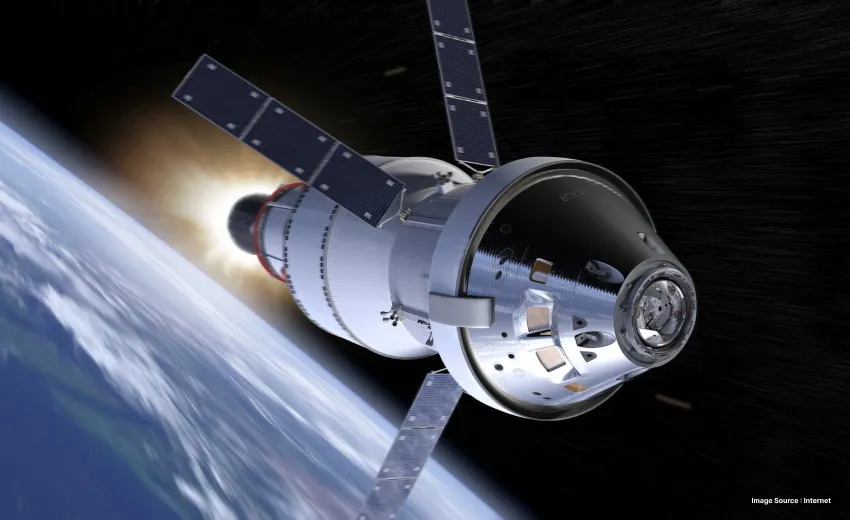
In April 2026, the most significant human spaceflight milestone was completed. NASA's Artemis II mission took astronauts Reid Wiseman, Victor Glover, Christina Koch, and CSA astronaut Jeremy Hansen on a 10-day journey around the Moon and came back safely to Earth, splashing down on April 10, 2026, in the Pacific Ocean off the coast of San Diego, California.
Artemis II was the first spaceflight carrying humans beyond low Earth orbit since Apollo 17 in 1972, and the first crewed flight of the Orion spacecraft, named "Integrity" by the crew. NASA tested life-support systems and critical operations in deep space, and this mission was an essential step towards future lunar explorations.
252,756 Miles from Earth — new human spaceflight record
54 years since humans last travelled this far from Earth.
10 Days of Total mission duration
4 Crew members
The Orion spacecraft reached a maximum distance of 252,756 miles ( 406,771 kilometres ) from Earth, setting a new record for human spaceflight — surpassing the previous record held by Apollo 13 in 1970.
“Artemis II is a test flight, and the test has just begun.” — NASA Associate Administrator Amit Kshatriya, April 2026
TL;DR: NASA's Artemis II sent four astronauts around the Moon in April 2026.
Why does this matter so much for open space travel?
The mission was pivotal for validating the Orion capsule's life-support systems and the SLS rocket's performance in deep space. With those systems now flight-proven with humans aboard, NASA can plan a lunar landing mission with Artemis IV with greater confidence. And each successful crewed deep-space mission normalises the idea that humans can travel beyond Earth, opening doors to the market of commercial open space travel.
Commercial Space Stations: Haven-1 and the Private Orbital Frontier
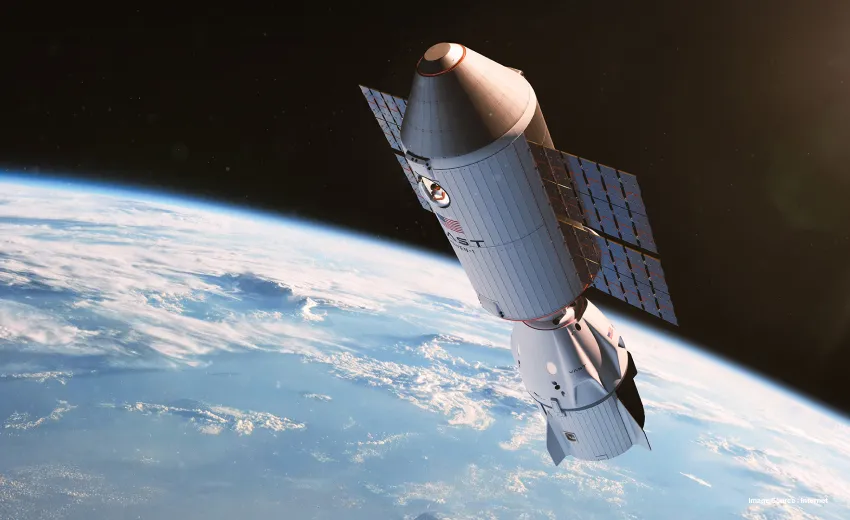
While NASA's Artemis II is drawing all the attention, something as significant is happening in the low Earth orbit. ISS , the International Space Station is about to retire in 2030. And private companies are rigorously competing to fill the gap and build a completely new commercial market in space.
Haven-1 is a commercial space station built by California-based startup Vast, and it will be launched by a SpaceX Falcon 9 rocket and represents a radical shift in the way humans live and work in space. The station is now expected to launch in early 2027. The first mission to Haven-1, called Vast-1, is expected to launch a crew of four astronauts aboard a Crew Dragon spacecraft.
Haven-1 is quite small, almost the size of a tour bus inside (45 cubic metres). It will host four astronauts at a time for roughly ten days per visit. Over its planned three-year orbital lifetime, only four such missions are currently scheduled.
The station's life-support system borrows from earlier NASA technology, running on a simpler "open loop" design like that used on the Space Shuttle. Crew members will arrive on a SpaceX Dragon spacecraft. Research will be conducted through Haven Lab, a microgravity laboratory with ten Middeck Locker Equivalent payload slots — the same standardised containers used on the ISS — enabling seamless transitions between vehicles for experiments.
Vast is also aiming to launch Haven-2, a full commercial space station, into low Earth orbit by 2028, which would allow astronauts to stay in space after the decommissioning of the International Space Station in 2030. Haven-2 is a markedly more ambitious structure: a single module will be 12 metres long with a 4.4-metre diameter and panoramic windows up to two metres across. Once fully configured, the station will offer at least 500 cubic metres of habitable space, compared to the ISS's current 388 cubic metres.
Vast is not alone in this race. Axiom Space has construction underway on a module targeted for launch at the end of 2026, while Blue Origin, Northrop Grumman, and Starlab are also in contention for NASA's Commercial LEO Destination contract. The winner — or winners — of that contract will essentially decide where humanity lives in orbit after the ISS era ends.
SpaceX, Blue Origin & Virgin Galactic: Who's Flying Explorers to Space?
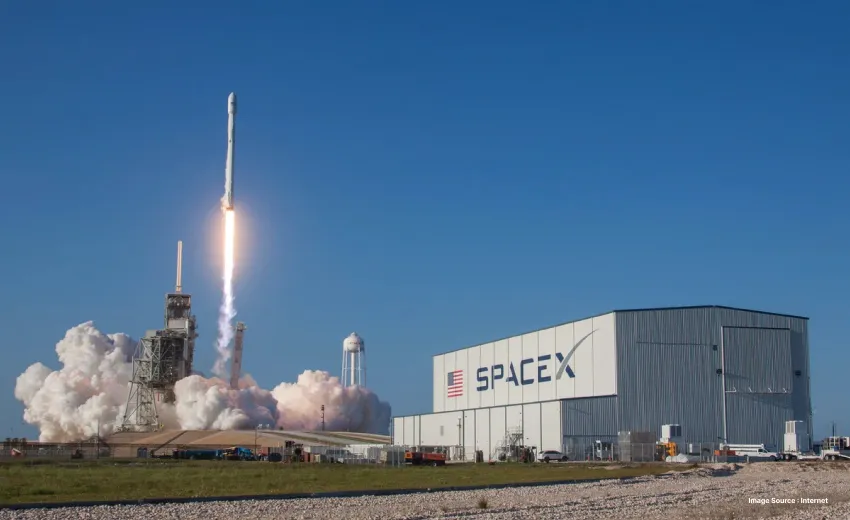
Three companies have long dominated the conversation around civilian spaceflight. Their offerings, however, are very different — and the landscape has shifted considerably in early 2026.
Its Crew Dragon spacecraft is the same vehicle used to transport NASA astronauts to the ISS, and it has been chartered for private missions, including Axiom Space's four ISS expeditions. SpaceX even conducted the first-ever private spacewalk by space tourists on its Polaris Dawn mission. For those with deep pockets and several months of preparation, SpaceX offers genuine orbital spaceflight — not just a few minutes at the edge of the atmosphere, but days in orbit.
Blue Origin made its name flying tourists on its New Shepard suborbital rocket — short, sharp rides to the Kármán line and back. But in January 2026, Blue Origin announced it would halt New Shepard tourism flights for at least two years in order to focus on its lunar programme. To date, a total of 92 people have flown on the New Shepard rocket across 17 human spaceflights.
With Blue Origin stepping back from tourism, Virgin Galactic is positioning itself to fill the void. Richard Branson said the company can "fill that gap" as Blue Origin takes its hiatus from the suborbital market. Virgin Galactic's previous SpaceShipTwo flew its final commercial flight in 2023, and the company has spent the intervening period developing its new Delta-class spaceplane. Flight testing is expected to begin in the third quarter of 2026, with commercial service starting in the fourth quarter of 2026. The new Delta Class craft can hold six passengers, up from four in the previous craft, and is designed to fly twice per week.
Ticket to the Stars: What Open Space Travel Actually Costs in 2026

Here is a frank look at what the market currently charges.
|
|
|
|
|
|
|---|---|---|---|---|
|
|
|
|
|
|
|
|
|
|
|
|
|
|
|
|
|
|
Virgin Galactic has reopened ticket sales at $750,000 per seat — roughly $150,000 more than the company previously charged — with an initial batch of 50 spots available. Over 675 customers are already on the waitlist.
Blue Origin's prices are not publicly listed, but industry estimates put the cost at approximately $1.5 million to $2 million per seat. For full orbital missions, the figures are far higher: Axiom Space charges participants roughly $70 million to undergo a year of astronaut training and undertake a two-week-long ISS mission.
The trajectory, at least in theory, points downward. The space tourism market is forecast to grow from $2.3 billion in 2026 to $47 billion by 2034 — an annual increase of 45% — as more companies enter the industry. Economies of scale and maturing reusable rocket technology should, over time, bring prices within reach of a broader (if still affluent) pool of travellers.
Despite the optimistic forecasts, a candid industry observer quoted in April 2026 noted: "There really is no suborbital space tourism market right now." Blue Origin's pause and Virgin Galactic's two-year hiatus left a significant gap.
Is Open Space Travel Safe?
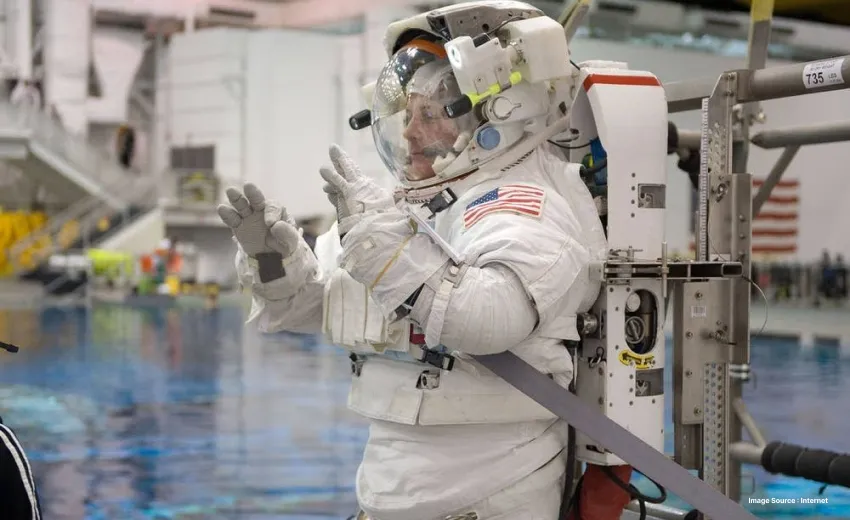
Safety is the question every prospective space traveller — and every sceptical journalist — asks first. The honest answer is nuanced.
As of May 2025, no commercial human spaceflight mission has resulted in the death of a government astronaut, a spaceflight participant, or a member of the general public.
But the historical record carries a sobering asterisk. As of April 2026, a total of 791 people have flown into space, and 19 of them have died in related incidents — a current statistical fatality rate of approximately 2.4 per cent. To put that in context: virtually all of those fatalities occurred in the government-era programmes of the 1960s through 2000s, in vehicles far less sophisticated than those flying today. The one commercial-era fatality occurred during a 2014 test flight of Virgin Galactic's SpaceShipTwo, which killed one crew member. That was a test flight, not a passenger mission.
Congress has extended the "learning period" for commercial spaceflight safety regulation to January 1, 2028, meaning the FAA may issue human occupant safety regulations only in response to a serious or fatal injury during an actual flight event. This is a deliberate policy choice — giving the industry room to develop without being constrained by rules written before anyone fully understood the risks — but it means passengers accept a degree of legal and physical uncertainty that does not exist in commercial aviation.
In the last five years alone, there have been over 60 launch-related incidents leading to total or partial mission loss — highlighting the inherent technical risks of current space travel.
Space is still hard. It is still risky. It is still expensive. For now, the view from above remains one of the most exclusive experiences money can buy.
NASA's Aerospace Safety Advisory Panel, in its 2025 annual report released in February 2026, warned that the agency's biggest challenges stem from interconnected factors — workforce, acquisition, technical authority, and budgets — requiring sustained attention as missions become more ambitious.
The bottom line: commercial space travel in 2026 is far safer than it was a decade ago, and the record so far for paying passengers is perfect. But it operates in an environment with thin regulatory oversight and genuine unknowns. Every passenger signs an informed consent document acknowledging they understand the risks. That is not theatre. It is a statement of fact.
TL;DR: No paying passenger has ever died on a commercial spaceflight, but the broader history of human spaceflight carries a fatality rate of roughly 2.4%.
What's on the 2026–2027 Launch Calendar
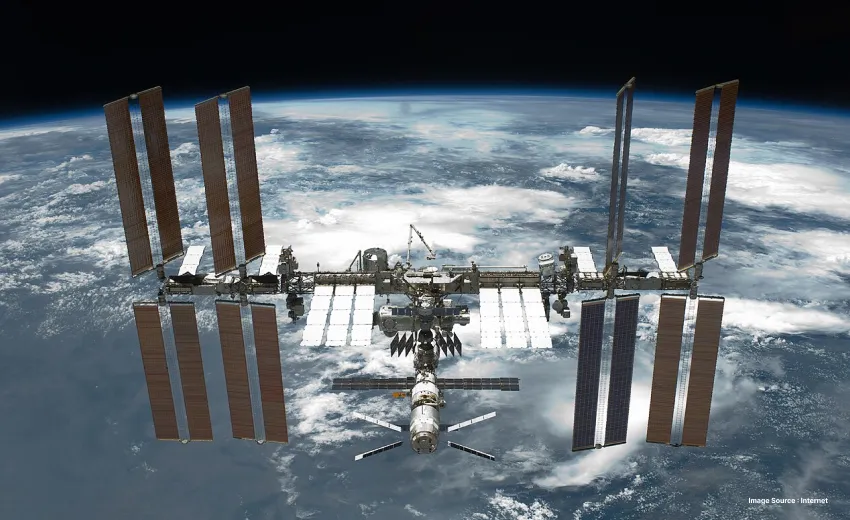
2026 is shaping up to be the busiest year in spaceflight history, with the global space industry projected to conduct over 250 orbital launches. Here are the most significant missions relevant to open space travel.
|
|
|
|---|---|
|
|
|
|
|
|
|
|
|
|
|
|
|
|
|
|
|
|
|
|
|
FAQs
1. Do you need training to go to space?
For suborbital flights like Virgin Galactic, you just need a few days of basic prep — learning what to expect from the G-forces and weightlessness. For orbital flights, you need several months of proper training. The further you go, the more preparation required.
2. Can anyone book a space flight ticket?
Yes, as long as you can afford it and pass a basic medical check. Virgin Galactic sells seats publicly at $750,000. No special connections needed. Orbital missions are harder to access mainly because of the cost and training commitment.
3. What is the difference between suborbital and orbital spaceflight?
Suborbital means you briefly cross into space and come straight back down — about 90 minutes total with a few minutes of weightlessness. Orbital means you actually circle the Earth at high speed and stay in space for days or weeks. Orbital is far more expensive and physically demanding.
Plan your bespoke india journey today
tell us what inspires you - and we will handcraft an experience that mirrors your elegance, pace & personality.
START PLANNINGBlogs Categories
It is a Sanskrit verse taken from an ancient Bharat (Indian) scripture
which means ‘The Guest is like God’.
In Bharat (India), guests are always welcomed with open arms and given
WANDER INDIA
Your go-to guide for exploring the best of India.

FESTIVALS OF INDIA
Festive Flavours
INDIAN HERITAGE
An enticing showcase of India’s glorious 5,000 year old history & heritage.

SACRED SPIRITUAL JOURNEYS
Discover what gives India the mystics that the world adores

TRAVEL TALES
Make the simplest of journeys unforgettable with hidden gems tours & extravagant stays.
You Will Like These Too...
It is a Sanskrit verse taken from an ancient Bharat (Indian) scripture
which means ‘The Guest is like God’.
In Bharat (India), guests are always welcomed with open arms and given







TRAVELOSEI PROMISE
What To Expect?

The Real India,
Re-Imagined For You
India is not just a destination - it's a world with-in the world. TRAVELOSEI go far beyond guide-books to offer you an India that is authentic yet exclusive, spiritual yet sophisticated delivered through private doors, rare access, and impeccable attention to details.

Trusted By Global Elites
From World Class Leaders to Forbes Listed Families and international Royalties to
visionary CEOS.
Our clientele chooses us for one reason - We Know India. Over two decades of providing
experiences which aren't just luxurious - they are intimate, curated & wildly rare.

Bespoke Travel Experience
For those who seek truth in detail, art in hospitality, and identity in experience. Our Luxury Travel Architect work discreetly and personally with you to craft travel experiences that go beyond 5 Stars, where every detail whispers luxury - and legacy.

White-Glove Concierge
24 X 7 Dedicated Concierge Support even in the wildest corners of India. At TRAVELOSEI, our concierge team ensures that everything-from airport- tarmac pick-ups, last minute reservations and private spiritual sessions - is handled before you even ask.


