
Last Updated : Apr 16, 2026 | Author : Md. Mohsin | View Count : 1083 | Read Time : 8 min
Interesting Facts About India That Will Amaze You
Most people think they really know India just because they have seen some photographs of the Taj Mahal at sunrise, the chaos of a crowded market, and a monk walking through rising incense smoke. But when they actually visit, they realize India itself is a different story, and the photographs were never really the point.
India is one of those rare places that consistently busts the myths. Every time you think you have seen it all, it shows you something else, something ancient, strange, or more beautiful than the last thing. The facts about India are endless, but the few mentioned below are not trivia. They are invitations. Each one unveils a layer of this country that most travelers never reach, and every single one of them is a reason to book the flight.
What are some surprising facts about India that most travelers don't know?
There are more interesting facts about India than most people expect before they visit. Beyond the monuments and the markets, the country holds things like the world's highest motorable road, a fully functional post office floating on a lake, and much more. Most travelers say the facts only scratch the surface of what actually surprises them when they get there.
Varanasi Is One of the Oldest Inhabited Cities on Earth
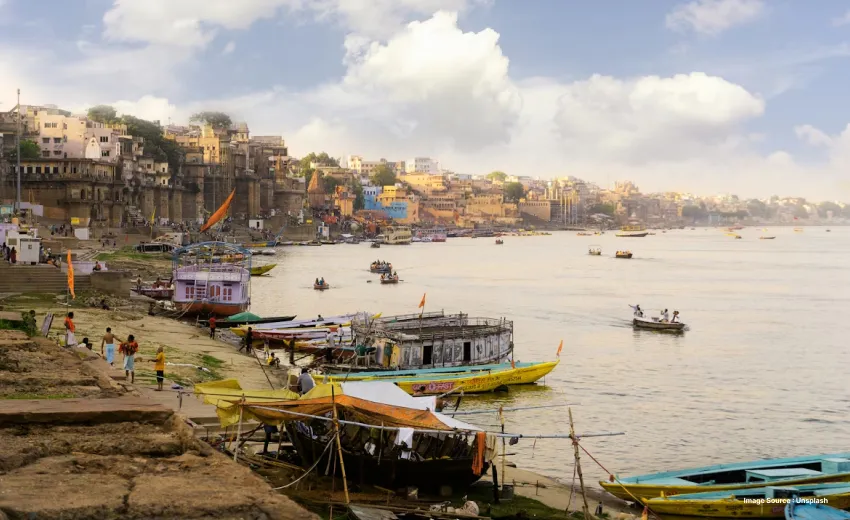
Varanasi is not just old; it's ancient, in a way that makes European cities feel recent.
Varanasi has been continuously inhabited for more than 3,000 years. It sits on the banks of the river Ganges with strong spiritual significance in Hinduism. It is considered to be the city of Lord Shiva, predating Rome, Athens, and most of the civilizations that shaped the Western world. Mark Twain, a prominent American writer, once wrote that Varanasi is older than history itself.
A walk through the ghats of the city at dawn is enough to give you chills and self-reflection. Watching the river quietly receive daily prayers in a ritual that has continued for thousands of years is not a sightseeing experience. It is something that makes time feel alive that can not be captured in photographs, even travellers find it difficult to explain the impact and why it lingers so strongly.
The World’s Highest Motorable Road Is in India
If you admire real adventures, this one is for you.
Umling La Pass in Ladakh sits at 19,024 feet above sea level, the highest paved and drivable road on earth. For context, even the Everest Base Camp is not that high. At that altitude, the air is thin, and the landscapes are otherworldly, but the road itself is a marvel of engineering.
The drive through Ladakh to reach it takes you through terrain that looks less like a different country but a different planet — cold, wind-carved valleys, bright blue lakes, and ancient Buddhist monasteries built on cliffs and surviving here for centuries. This is India’s most dramatic and challenging place. The place that looks very different from what most people usually imagine when they think of India, it feels unexpected and surprising.
The Taj Mahal Took 20 Years and 20,000 Artisans to Build
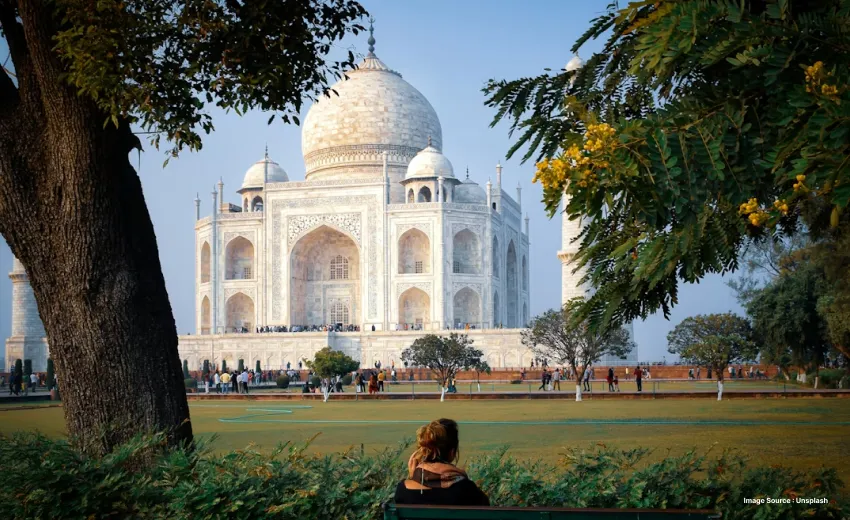
The Taj Mahal was commissioned by Mughal Emperor Shah Jahan in 1632 as a mausoleum for his wife Mumtaz Mahal, after her death during childbirth. It took over 22 years to complete and employed approximately 20,000 artisans all over India, Persia, and Central Asia. Materials used in construction were imported from more than twenty countries. The white marble used was from Makrana, which is almost 250 kilometres away from Agra. It was moved with a grand fleet of elephants.
What the photographs do not show is the precision of its design and how huge yet symmetrical everything is, except for the emperor’s tomb: Shah Jahan’s own cenotaph, placed beside his wife’s, slightly off-center. Some historians believe that it was intentional in an otherwise flawless structure. Others believe that it depicts the true human nature.
Standing in front of it for the first time is enough to turn you quiet, and the response has been the same for four centuries.
TL;DR: Built by Mughal Emperor Shah Jahan in memory of his wife, the Taj Mahal took 22 years and 20,000 artisans to complete.
India Has 44 UNESCO World Heritage Sites
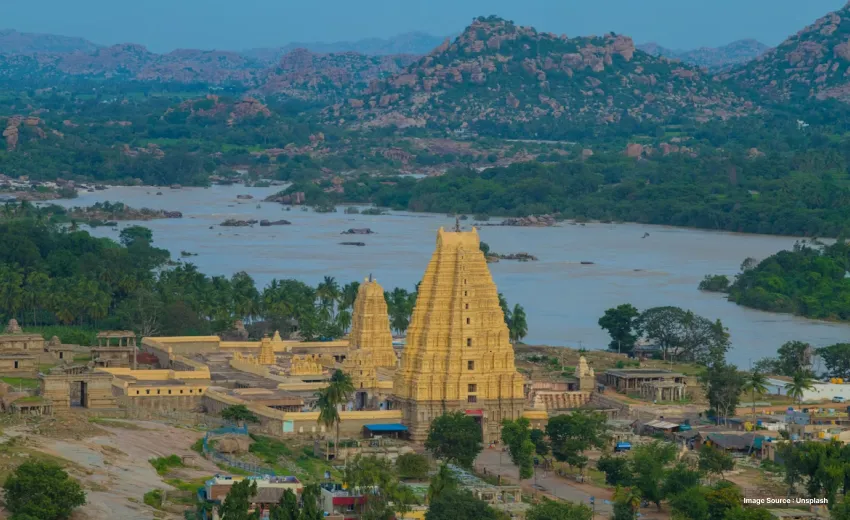
One of the most interesting facts about India for history lovers is that it holds 44 UNESCO World Heritage Sites. The country holds its place in the top 5 countries in the world for most UNESCO-recognized cultural and natural landmarks, with a grand number of forty-four sites, and the list reads like an itinerary that would take several lifetimes to complete properly.
Hampi, the ruined capital of the Vijayanagara Empire, a powerful south Indian empire known for its wealth, massive cities, and architectural brilliance, where carved temples stretch as far as the eye can see. The cave paintings of Ajanta and Ellora were carved directly into volcanic rock by Buddhist monks over centuries. The living root bridges of Meghalaya. The Khajuraho temples, whose extraordinary stone sculptures are among the most sophisticated artistic achievements of the medieval world.
Yoga and Ayurveda Originated in India Over 5,000 Years Ago
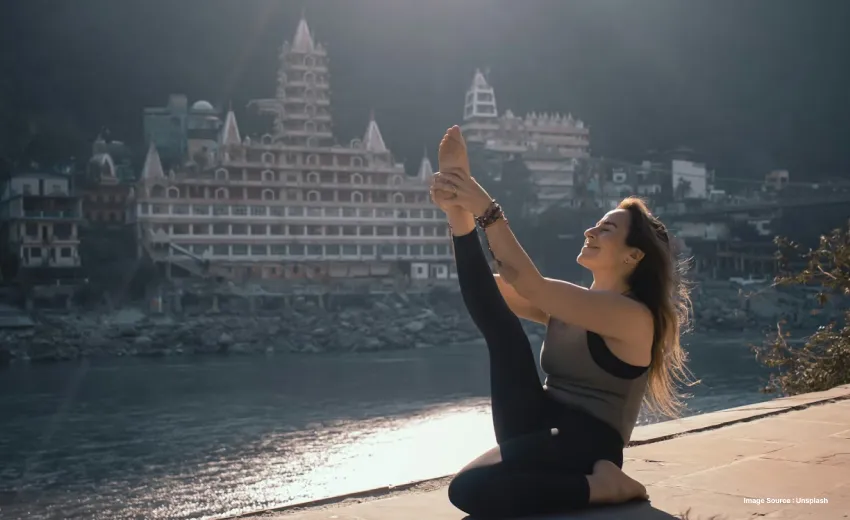
Among the most interesting facts about India that surprise Western travelers is that yoga and Ayurveda both originated here over 5,000 years ago. Long before “wellness” became a global industry, these two major practices originally developed in ancient India as deeply connected systems of healing, balance, and philosophy.
Today, they have become massive global movements—hundreds of millions practice yoga worldwide, and Ayurveda has grown into a multi-billion-dollar wellness industry. Yet their original roots are still kept alive and intact in a few key places.
Rishikesh, also known as the yoga capital , on the banks of the Ganges in the Himalayan foothills, remains one of the world’s most important centers for traditional yoga learning and spiritual practice.
Kerala, where Ayurveda was born and texts were written for the first time, is one of the strongest living hubs of Ayurveda, where ancient healing methods like herbal medicine, oil therapies, and personalized treatments are still practiced in their traditional form with knowledge that has been passed through generations.
Together, Rishikesh and Kerala represent two living pillars of India’s ancient wellness heritage—one focused on inner discipline and movement, the other on healing and restoration.
The Sundarbans Is the Largest Mangrove Forest in the World
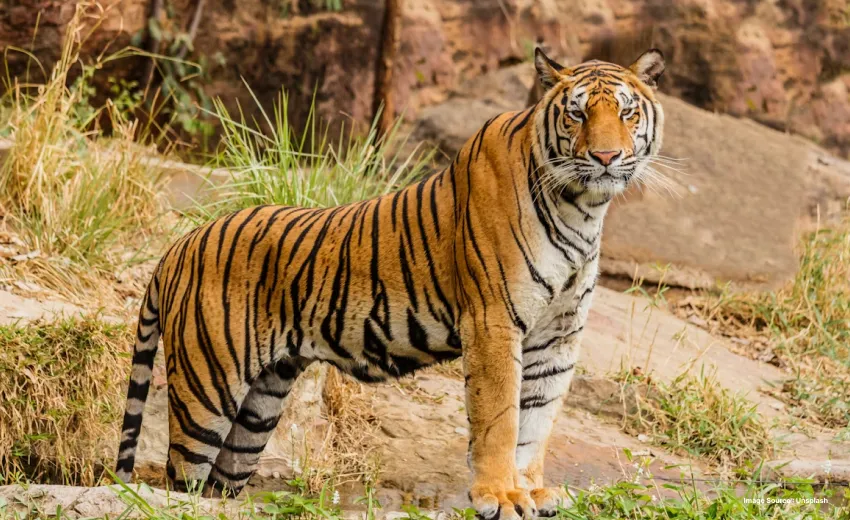
Sundarban straddles the border of India and Bangladesh. This dense mangrove forest covers roughly 10,000 square kilometers of area — a landscape of twisted roots, brackish waterways, and tidal channels that shifts with every flood cycle. It was declared a UNESCO World Heritage Site in 1987.
What makes the Sundarbans truly remarkable, beyond its vast size, is the wildlife it supports. Its Bengal tigers have uniquely adapted to a tidal, watery world. They swim through islands, moving through mangrove channels for hunting, and behaving differently from tigers in any other habitat.
You can experience the Sundarbans by joining guided boat safaris that take you through its narrow, twisting water channels, dense mangrove channels, and protected wildlife zones. Most journeys begin from Kolkata and continue into designated forest areas where visitors travel entirely by water, often stopping at watchtowers for chances to spot wildlife like crocodiles, deer, and, in a rare case, the elusive Bengal tiger.
India Has a Floating Post Office
Dal Lake in Srinagar, Kashmir, is known for its houseboats, its markets, and its extraordinary mountain views. It is also home to something considerably more unusual: a fully operational post office, built on a boat, floating on the lake.
The floating post office has been running since 1955. It sells stamps, handles mail, and offers a small philately counter for collectors. You reach it by shikara — the traditional wooden gondola of Dal Lake — and you can send a postcard from it to anywhere in the world.
It is, admittedly, not the most dramatic item on this list. But there is something about the image — a letter dispatched from a wooden boat on a Himalayan lake, traveling to a mailbox in New York or Los Angeles — that captures something true about India. This country finds ways to be extraordinary in the most unexpected places.
The Gulmarg Gondola Is One of the Highest Cable Cars in the World
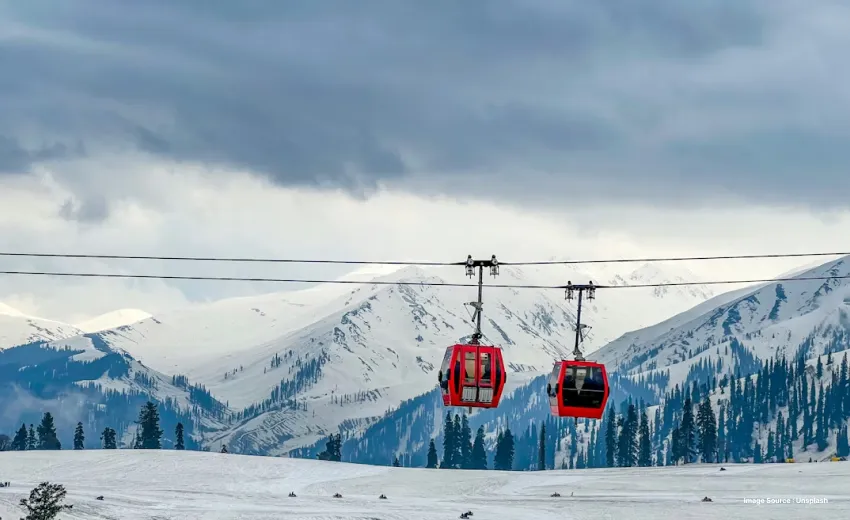
Also in Kashmir, Gulmarg is a hill station that transforms dramatically by season. In summer, it is a meadow of wildflowers ringed by Himalayan peaks. In winter, it becomes one of Asia’s finest ski destinations.
The Gulmarg Gondola carries passengers to a height of approximately 13,400 feet in its second phase — placing it among the highest cable car rides in the world. The views from the top encompass some of the most dramatic Himalayan scenery accessible by any mechanized means of transport: a panorama of snow-covered peaks, deep valleys, and, on clear days, the outline of Nanga Parbat — the world’s ninth highest mountain — in the distance.
For American travelers who associate India primarily with heat and density, Gulmarg is a useful corrective. The country contains everything.
At Magnetic Hill, Cars Roll Uphill on Their Own
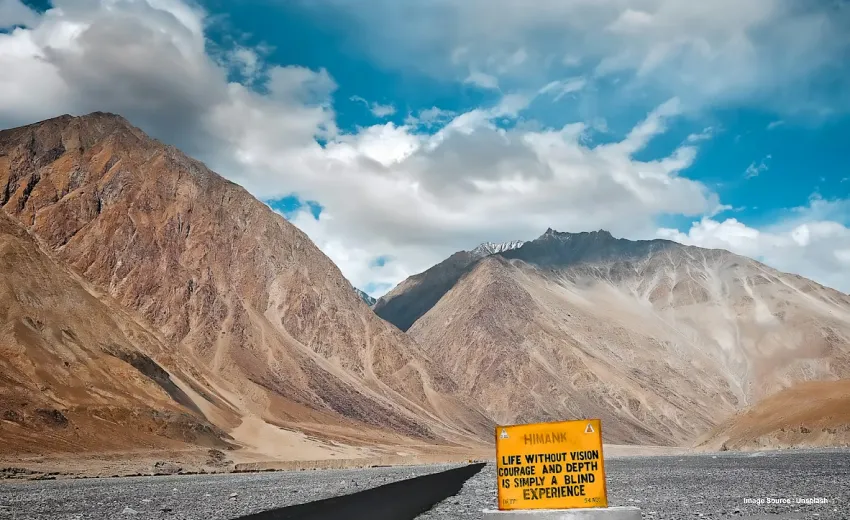
Near Leh in Ladakh, there is a stretch of road that appears to defy the basic rules of physics. Park your car on the designated spot, switch off the engine, release the handbrake — and the vehicle will slowly begin rolling forward, apparently uphill.
The scientific explanation involves an optical illusion created by the surrounding landscape, which tricks the eye into perceiving a downhill slope as an uphill one. The road is actually on a gentle decline. But knowing the explanation does very little to diminish the experience of watching it happen in person.
Magnetic Hill has become one of Ladakh’s most visited roadside stops, which is itself a measure of something. In a region full of genuinely extraordinary sights — ancient monasteries, high-altitude lakes of impossible blue, mountain passes at the edge of the atmosphere — a road that appears to roll cars uphill still manages to stop traffic.
North Sentinel Island — A Civilization Untouched by the world
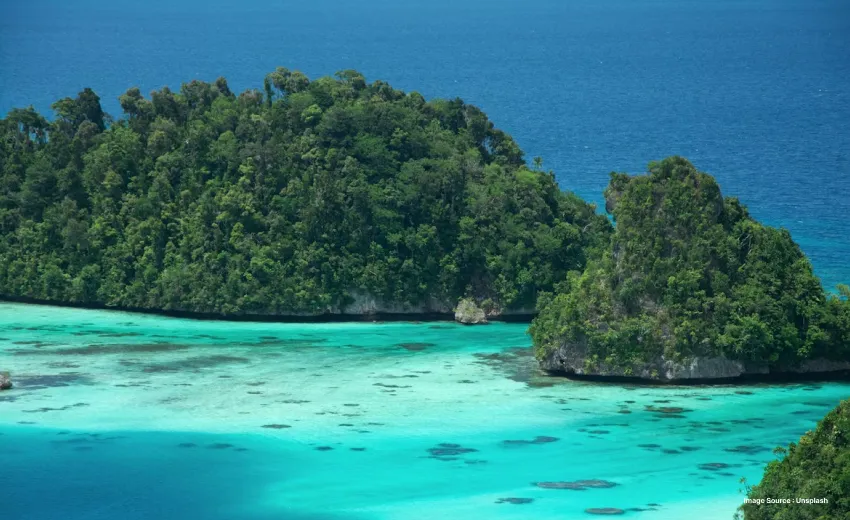
Perhaps one of the most interesting facts about India is that a civilization completely untouched by the modern world exists just 50 kilometers from a beach resort. In the Andaman Sea, roughly 50 kilometers from Port Blair, lies a small, densely forested island that functions as one of the most extraordinary anomalies on the modern map.
North Sentinel Island is home to the Sentinelese — a tribe estimated to number between 50 and 500 people who have lived in complete isolation from the outside world for an estimated 60,000 years. They have rejected every attempt at contact, sometimes violently, and the Indian government has established a legally enforced exclusion zone around the island. Approaching within 3 nautical miles is prohibited by law.
The Sentinelese have no knowledge of the internet, of cities, or of any civilization that has emerged in the last several millennia. They are, by every measure, a society that has remained entirely unchanged while the rest of the world transformed beyond recognition around them. North Sentinel Island is not a tourist destination. It is not accessible. It simply exists — 50 kilometers from the nearest beach resort, behind an invisible line that the modern world has agreed not to cross.
TL;DR: The Sentinelese people of North Sentinel Island have lived in complete isolation for an estimated 60,000 years, rejecting all outside contact.
The interesting facts about India listed here are really just the beginning. The country has a way of surprising you long after you think you have seen it all.
FAQs
1. What makes India one of the most historically significant countries in the world?
India is home to some of the world's oldest continuously inhabited cities, including Varanasi, which has been lived in for over 3,000 years. It also holds 44 UNESCO World Heritage Sites, spanning ancient cave temples, medieval ruins, and living natural ecosystems. Few countries contain that density of history within a single border.
2. Is India only about history and temples, or is there more to explore?
India covers nearly every kind of landscape and experience imaginable, from high-altitude drives on the world's highest motorable road in Ladakh to skiing in the Himalayan meadows of Gulmarg. The country also holds the world's largest mangrove forest and a lake in Kashmir with a floating post office. The range is genuinely difficult to overstate.
3. What is North Sentinel Island and can tourists visit it?
North Sentinel Island is home to the Sentinelese, a tribe that has lived in complete isolation for an estimated 60,000 years and has consistently rejected all outside contact. The Indian government has established a legally enforced exclusion zone around the island, and approaching within 3 nautical miles is prohibited. It is one of the few places on earth that remains entirely off-limits.
Plan your bespoke india journey today
tell us what inspires you - and we will handcraft an experience that mirrors your elegance, pace & personality.
START PLANNINGTrending Travel Stories
Stay inspired with our most popular travel stories, practical advice, and must-read destination guides.
Hindu Temples in the USA
The True Meaning Behind The Festival of Light
Sacred Myths or Misunderstood Realities?
The Richest Indian Tradition
The Camping Gear Guide
Sea to Summit dry bag

Backpacking Sleeping Pad
Top 6 Places to Travel in December
TRAVELOSEI PROMISE
What To Expect?

The Real India,
Re-Imagined For You
India is not just a destination - it's a world with-in the world. TRAVELOSEI go far beyond guide-books to offer you an India that is authentic yet exclusive, spiritual yet sophisticated delivered through private doors, rare access, and impeccable attention to details.

Trusted By Global Elites
From World Class Leaders to Forbes Listed Families and international Royalties to
visionary CEOS.
Our clientele chooses us for one reason - We Know India. Over two decades of providing
experiences which aren't just luxurious - they are intimate, curated & wildly rare.

Bespoke Travel Experience
For those who seek truth in detail, art in hospitality, and identity in experience. Our Luxury Travel Architect work discreetly and personally with you to craft travel experiences that go beyond 5 Stars, where every detail whispers luxury - and legacy.

White-Glove Concierge
24 X 7 Dedicated Concierge Support even in the wildest corners of India. At TRAVELOSEI, our concierge team ensures that everything-from airport- tarmac pick-ups, last minute reservations and private spiritual sessions - is handled before you even ask.


